Coccidiosis is an intestinal parasitic disease caused by protozoa of the genus Eimeria (and in some species Isospora). It is especially common in aviaries with many birds, where humidity, overcrowding and contaminated droppings create the ideal environment for the parasite. Recognizing it early and acting with your vet can make the difference between a recovered bird and the loss of an entire aviary.
⚠️ Important medical disclaimer: This guide is purely informational and does not replace a veterinary visit. Coccidiosis is diagnosed with a fecal exam, and anticoccidial drugs (toltrazuril, sulfonamides) must be administered only under the prescription of a veterinarian specialized in exotic animals, who sets dosage and duration. Self-medicating is dangerous: wrong doses cause resistance, toxicity and misdiagnosis.
In this guide:
1. What coccidiosis is
Coccidiosis is an intestinal infection sustained by microscopic protozoa of the genus Eimeria. These parasites multiply inside the cells of the intestinal mucosa, damaging it: the result is poor nutrient absorption, diarrhea and, in severe cases, bleeding and dehydration.
The parasite cycle runs through the droppings: the canary sheds immature forms called oocysts, which mature in the environment (especially in warm, humid conditions) and become infective. Another bird ingests them by pecking on the cage floor or drinking contaminated water, and the cycle starts again.
- Most at-risk birds: young birds, weakened individuals, stressed birds or those with a low immune response.
- Aggravating factors: overcrowding, dirty cages, humidity, seasonal changes, coexistence with other infections.
- Why it's dangerous: many birds remain "silent" carriers and contaminate the environment before showing obvious symptoms.
Coccidiosis is one of the digestive conditions described in our general canary disease guide: here we cover it step by step.
2. How it spreads
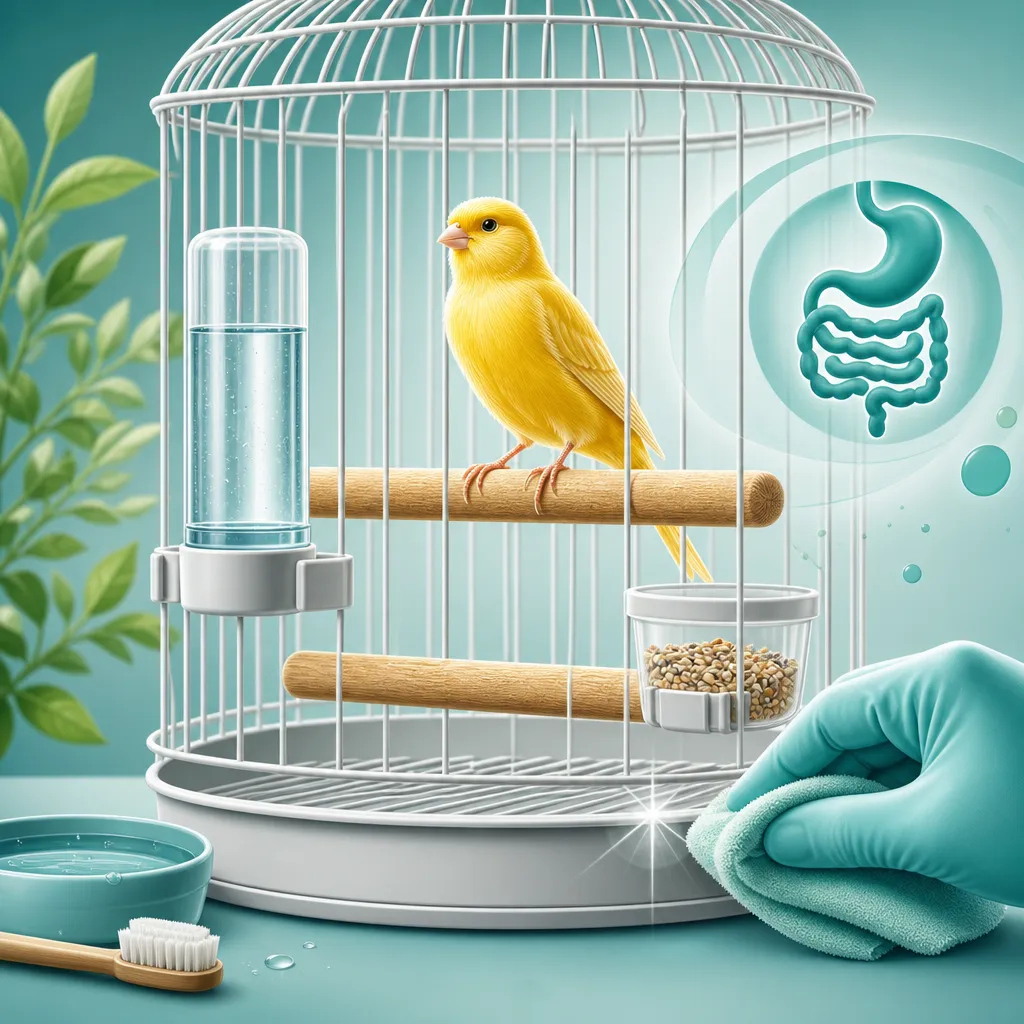
Transmission is fecal-oral: the canary becomes infected by ingesting oocysts present in contaminated droppings. Three conditions dramatically amplify contagion in an aviary.
Contaminated droppings
Food and water soiled by droppings, an uncleaned cage floor, feeders on the ground: these are the main route of contagion.
Humidity
Oocysts mature and become infective in warm, humid environments. Dripping drinkers, wet bedding and poor ventilation multiply the risk.
Overcrowding
Too many birds per cage increase the oocyst load in the environment and stress, lowering immune defenses.
Oocysts are resistant: they survive a long time in the environment and are poorly sensitive to many common disinfectants. That's why drug therapy alone is not enough without environmental cleanup (see isolation and hygiene).
3. Symptoms to recognize
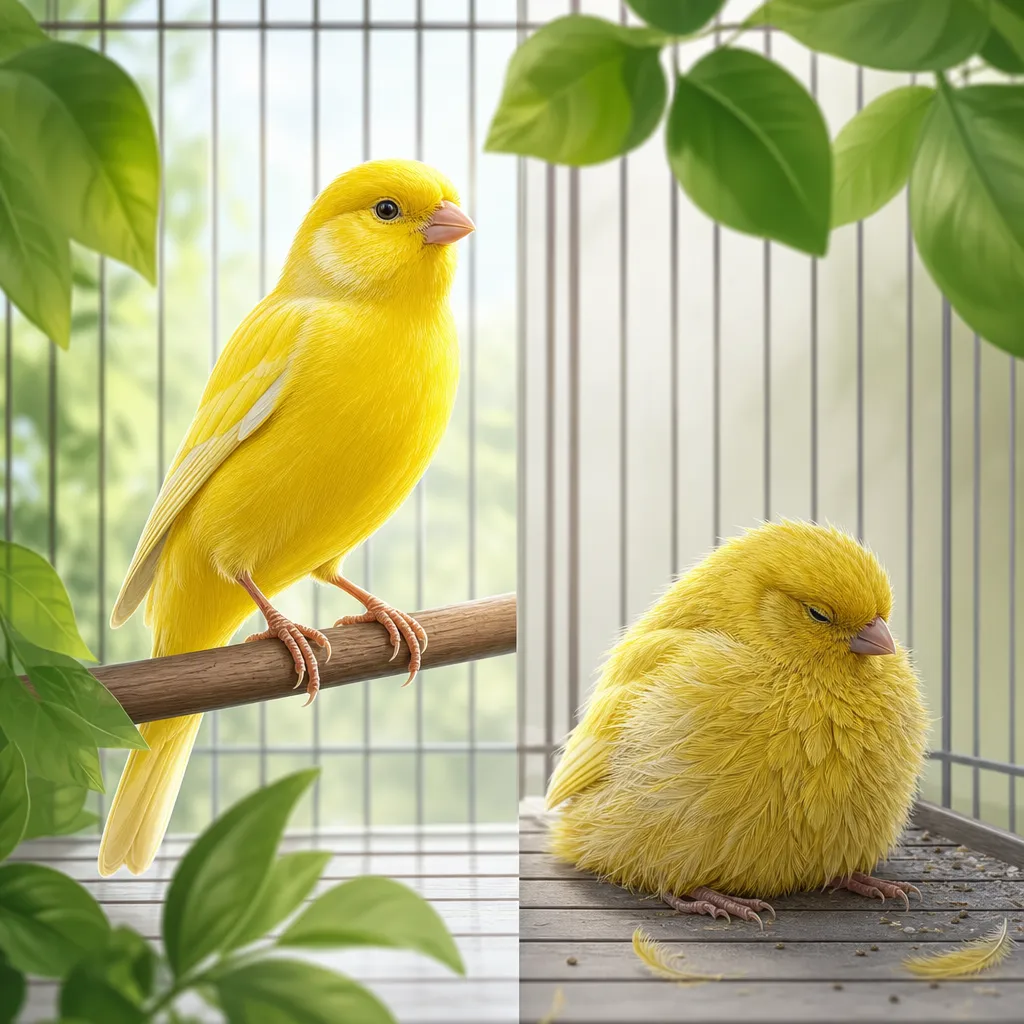
Canaries hide illness until it is advanced. Observe droppings, weight and posture every day. The typical signs of coccidiosis are:
Intestinal signs
- Persistent diarrhea, soft/liquid droppings
- Presence of blood or mucus in droppings (severe cases)
- Dirty cloaca and soiled plumage around it
- Increased water consumption (dehydration)
General signs
- Rapid weight loss (prominent keel bone)
- Constantly ruffled and puffed plumage
- Lethargy, drowsiness, sitting on the cage floor
- Reduced or absent song, declining appetite
Warning: blood in droppings, marked prostration, or several birds affected within a few hours are signs of an emergency. Isolate immediately and contact the vet the same day.
4. Diagnosis: the fecal exam
Coccidiosis cannot be diagnosed by sight: diarrhea and weight loss are common to many diseases (see differential). Confirmation comes from the parasitological fecal exam performed by the vet.
- Sample collection: collect fresh droppings (ideally over several days) on a clean sheet or wax paper under the perch; keep them in a clean container and take them to the clinic quickly.
- What the vet looks for: Eimeria oocysts under the microscope, often using enrichment techniques (flotation) and counting to estimate the parasite load.
- False negatives: oocyst shedding is intermittent; a negative exam with suspicious symptoms may require a repeat a few days later.
Only after diagnosis does the vet set the targeted therapy. Pushing "blind" drugs risks treating the wrong disease while the real one gets worse.
5. Treatment (veterinary prescription only)
⚠️ Drugs from the vet only: the information below is educational. Dosages, duration and choice of molecule depend on the bird, weight, severity and test results. Do not administer anything on your own initiative.
The active ingredients most used against coccidiosis in birds are:
| Category | Examples | Notes (veterinary use) |
|---|---|---|
| Triazinones | Toltrazuril | Anticoccidial often in drinking water; cycles and pauses set by the vet |
| Sulfonamides | Sulfadimethoxine and similar | Active on coccidia; watch duration and the bird's hydration |
| Supportive care | Rehydration, probiotics, warmth | Support the bird during treatment; agreed with the vet |
Key points of the treatment phase:
- Hydration: diarrhea dehydrates. The vet may indicate rehydration solutions in the water.
- Warm environment: keep the sick bird at a comfortable temperature (about 25-28 °C with a lamp), sheltered from drafts.
- Complete the course: do not stop the drug as soon as the bird seems better; follow the prescription exactly to avoid relapses and resistance.
- Post-treatment check: a follow-up fecal exam verifies the treatment's effectiveness.
6. Isolation and radical hygiene
The drug treats the bird, but without environmental cleanup the infection returns. Coccidiosis is fought as much in the cage as in the environment.
- Isolate the sick bird immediately in a hospital cage, in another room, with dedicated food and water.
- Remove droppings every day (even several times): fewer oocysts in the environment means less reinfection.
- Eliminate humidity: fix dripping drinkers, improve ventilation, keep bedding dry.
- Deep mechanical cleaning: oocysts resist many chemical disinfectants. Thoroughly wash cages, perches and feeders with boiling water; where possible use dry heat/steam. Smooth, well-dried surfaces hinder the parasite.
- Raised feeders and drinkers: prevent fecal contamination of food and water.
- Personal hygiene: wash your hands and change/clean tools between cages so you don't act as a vector.
Golden rule: dry cage, droppings removed, no food on the ground. Coccidiosis thrives in damp filth: remove the humidity and you remove the problem at its root.
7. Prevention
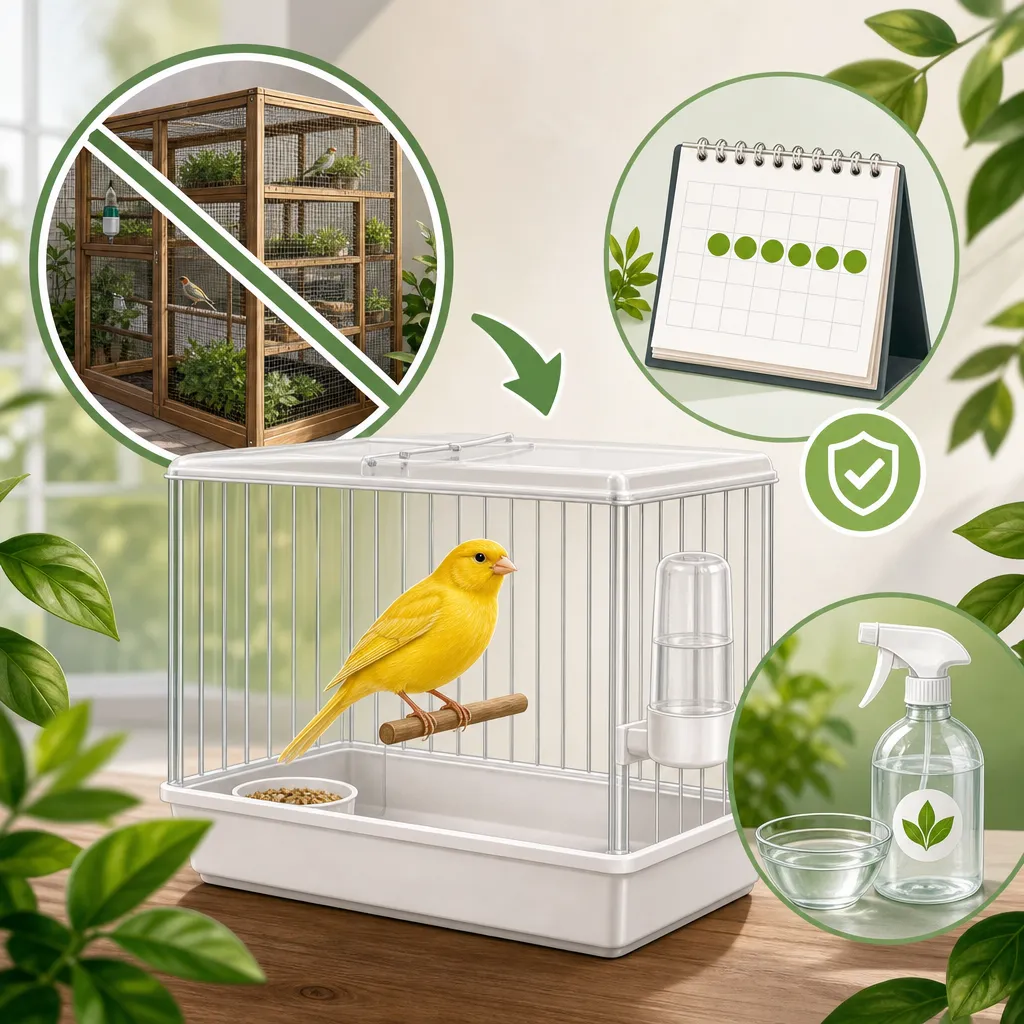
Preventing coccidiosis means breaking the fecal-oral cycle with correct hygiene and management.
- Daily hygiene: change the water every day, clean the cage floor and remove leftover moist food.
- No food on the ground: use raised feeders and drinkers protected from droppings.
- Control humidity: good ventilation, non-dripping drinkers, dry bedding.
- Avoid overcrowding: proper density per cage and aviary reduces parasite load and stress.
- Quarantine new arrivals: 15-20 days in isolation with a fecal exam before introducing them to the others.
- Proper feeding: a well-nourished bird has better defenses. See the feeding guide.
- Periodic fecal check: a seasonal parasitological exam catches silent carriers.
- Reduce stress: stability, adequate light and temperature strengthen immunity.
Coccidiosis often travels alongside other problems: keep external parasites in check too with the mites guide, because a weakened bird is more vulnerable.
8. Differential: coccidiosis, salmonellosis or enteritis?
Diarrhea and weight loss are not enough to say "it's coccidiosis". Here's how the main digestive causes differ — the definitive diagnosis still belongs to the vet.
| Condition | Indicative signs | Severity | Key note |
|---|---|---|---|
| Coccidiosis (Eimeria) | Diarrhea (sometimes with blood), weight loss, ruffled plumage | High | Diagnosed with fecal exam; common in humid/crowded settings |
| Salmonellosis | Greenish diarrhea, swollen joints, sudden death | High | Zoonosis: transmissible to humans, maximum hygiene |
| Non-specific enteritis | Liquid droppings from poor diet, dirty water, stress | Medium | Often improves by correcting diet and hygiene; if it persists → vet |
For the full picture of digestive and bacterial diseases (including salmonellosis and enteritis) see the general canary disease guide. Remember: salmonellosis is a zoonosis, so always wash your hands after handling birds with diarrhea.
9. Coccidiosis emergency checklist
- ☐ Immediately isolate the bird with diarrhea/blood in droppings
- ☐ Keep it warm (25-28 °C), away from drafts
- ☐ Provide clean water and rehydration (as directed by the vet)
- ☐ Collect a fresh fecal sample for the exam
- ☐ Contact the exotic-animal vet the same day
- ☐ Remove droppings and disinfect/dry cage, perches and feeders
- ☐ Raise feeders and drinkers, eliminate food and water on the ground
- ☐ Reduce humidity and improve ventilation
- ☐ Do not administer drugs without a prescription
- ☐ Complete the treatment course and do the follow-up fecal exam
Try GenHub free tools
Simulate genetic pairings and calculate inbreeding, then sign up to unlock the full breeding software.
Also read: Disease Guide · Mites Guide · Feeding Guide
Sources and further reading
General references on bird health and welfare:
Content drafted with AI support and human editorial review.