Every canary breeder, whether for passion or selection, sooner or later faces a question: "why did this pair produce chicks of a color I wasn't expecting?"
The answer lies in genetics. Canary traits — plumage color, song type, shape and posture — are never transmitted "at random." They follow precise rules that, once understood, transform breeding from a lottery into a predictable science.
In this guide:
1. Why Genetics Matters in Breeding
Key point: knowing genetics allows you to plan pairings instead of improvising them. You can predict the phenotypes of the offspring, reduce undesirable traits and select the characteristics you want to fix in your line.
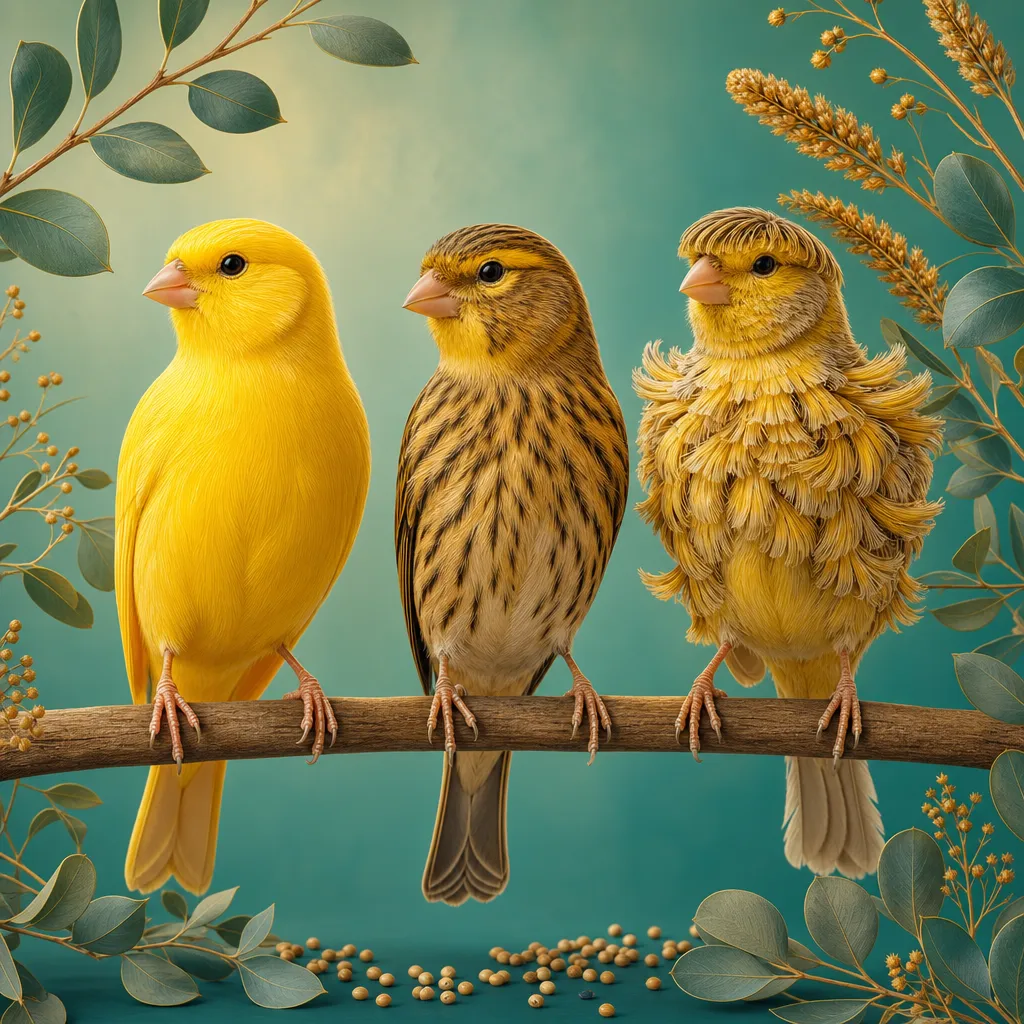
In the world of canaries, there are three major genetic families to work with:
- Lipochrome color — the background color (yellow, red, white)
- Melanin color — the melanins that determine patterns (brown, agate, isabella, etc.)
- Structural mutations — factors that modify the shape of feathers or body (intensive, frost, mosaic)
2. Dominance, Recessivity and Co-dominance
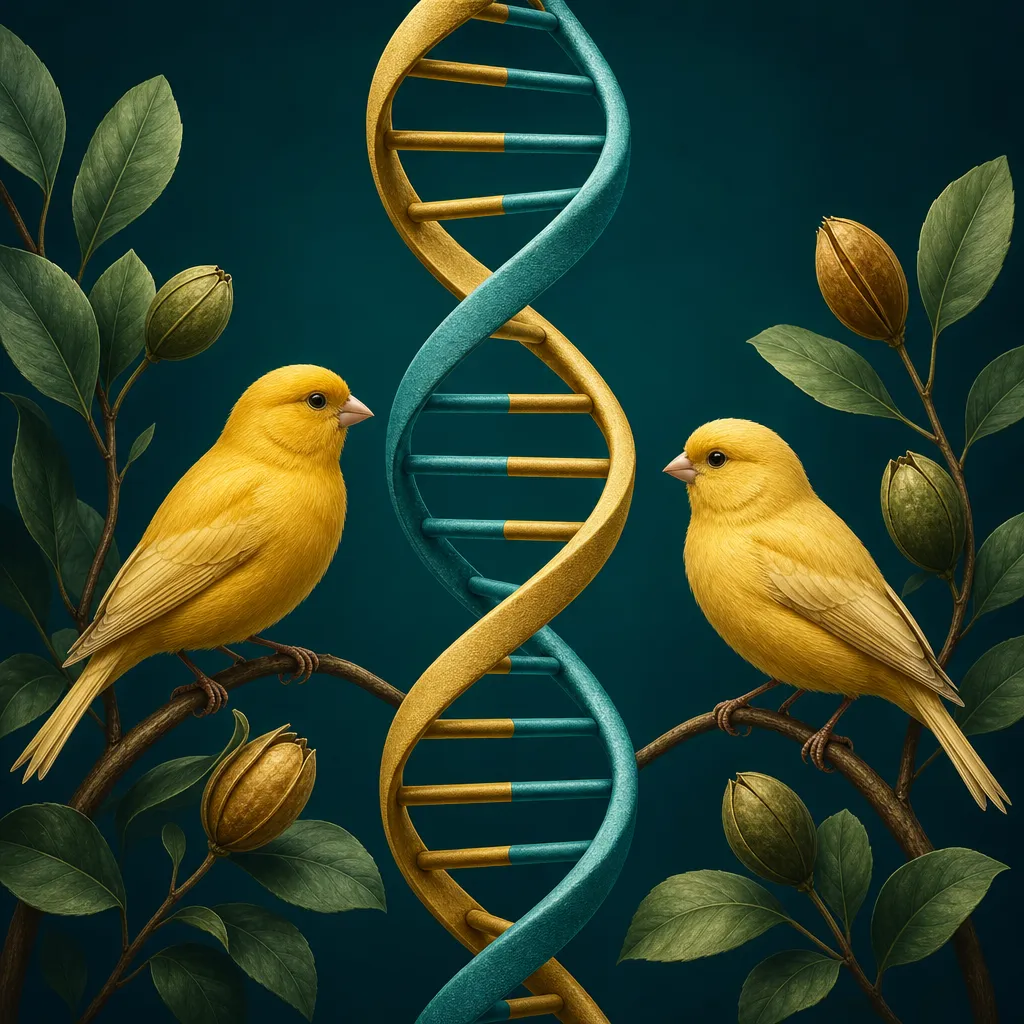
Every canary inherits two copies of each gene: one from the father and one from the mother. The way these two copies interact determines the visible trait (phenotype).
Dominant gene
A gene is dominant when a single copy is enough for the trait to appear. If we denote the dominant gene with A and the recessive with a, individuals AA and Aa both show the dominant trait. Only aa shows the recessive one.
Example in canaries: the intensive factor is partially dominant over frost.
Recessive gene
A recessive gene manifests only when present in double copy (aa). If a canary has one recessive and one dominant copy (Aa), the recessive trait is "hidden" but can be passed to offspring — that's why sometimes chicks are born with colors you didn't expect: both parents were healthy carriers of the recessive gene.
Example: recessive white lipochrome — two yellow parents can produce white offspring if both carry the recessive gene.
Co-dominance and incomplete dominance
In some cases, neither allele completely dominates the other. The phenotype of the heterozygote (Aa) is intermediate between the two homozygotes. In canaries, mosaic is a classic example of sex-linked intermediate expression.
Practical rule: when breeding for a recessive trait, you must always know whether your breeders are carriers. Genetics software calculates these probabilities automatically — without having to do Punnett squares by hand.
3. What Inbreeding Is and How to Calculate It
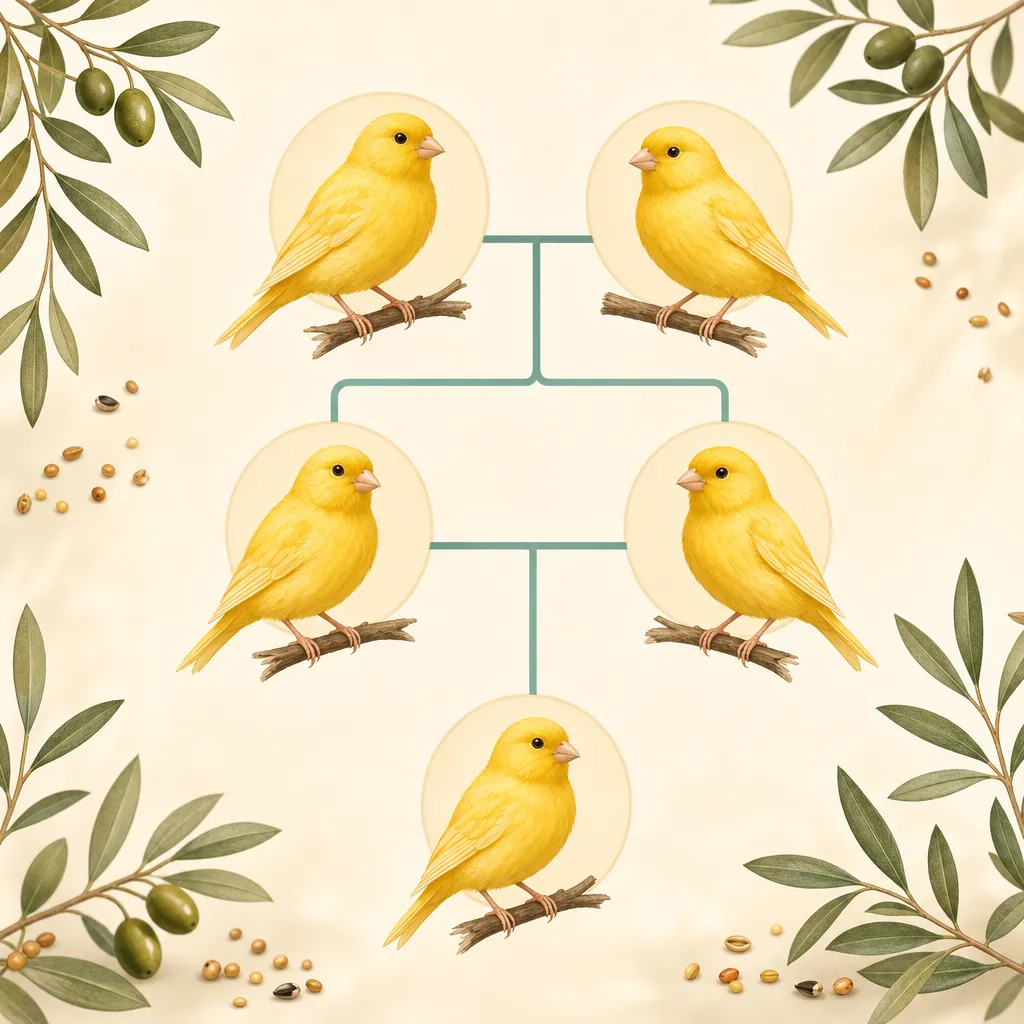
Inbreeding occurs when two related individuals mate. The result is an increased probability that offspring inherit two identical copies of the same gene.
The inbreeding coefficient (F)
The F coefficient measures the probability that an individual inherits two alleles identical by descent from a common ancestor. In practical terms:
- F = 0% — no inbreeding (unrelated parents)
- F = 6.25% — first cousin mating
- F = 12.5% — uncle-niece mating
- F = 25% — sibling (or parent-offspring) mating
Wright's Formula (simplified)
F = Σ (½)n₁ + n₂ + 1 × (1 + FA)
where n₁ and n₂ are the genealogical steps connecting the two parents to the common ancestor, and FA is the inbreeding coefficient of the ancestor.
Why it's dangerous
Inbreeding is not always negative — in selective breeding it can serve to fix a desired trait (linebreeding). But if uncontrolled:
- Increases embryonic mortality and nestling fragility
- Increases the incidence of recessive genetic diseases
- Reduces fertility and genetic variability (inbreeding depression)
Attention threshold: in amateur canary breeding, an F coefficient above 10% should make you think. Above 20%, the risk of problems becomes significant. With a digital pedigree of 7-10 generations, the calculation is automatic and accurate.
4. The Digital Pedigree: Much More Than a Tree
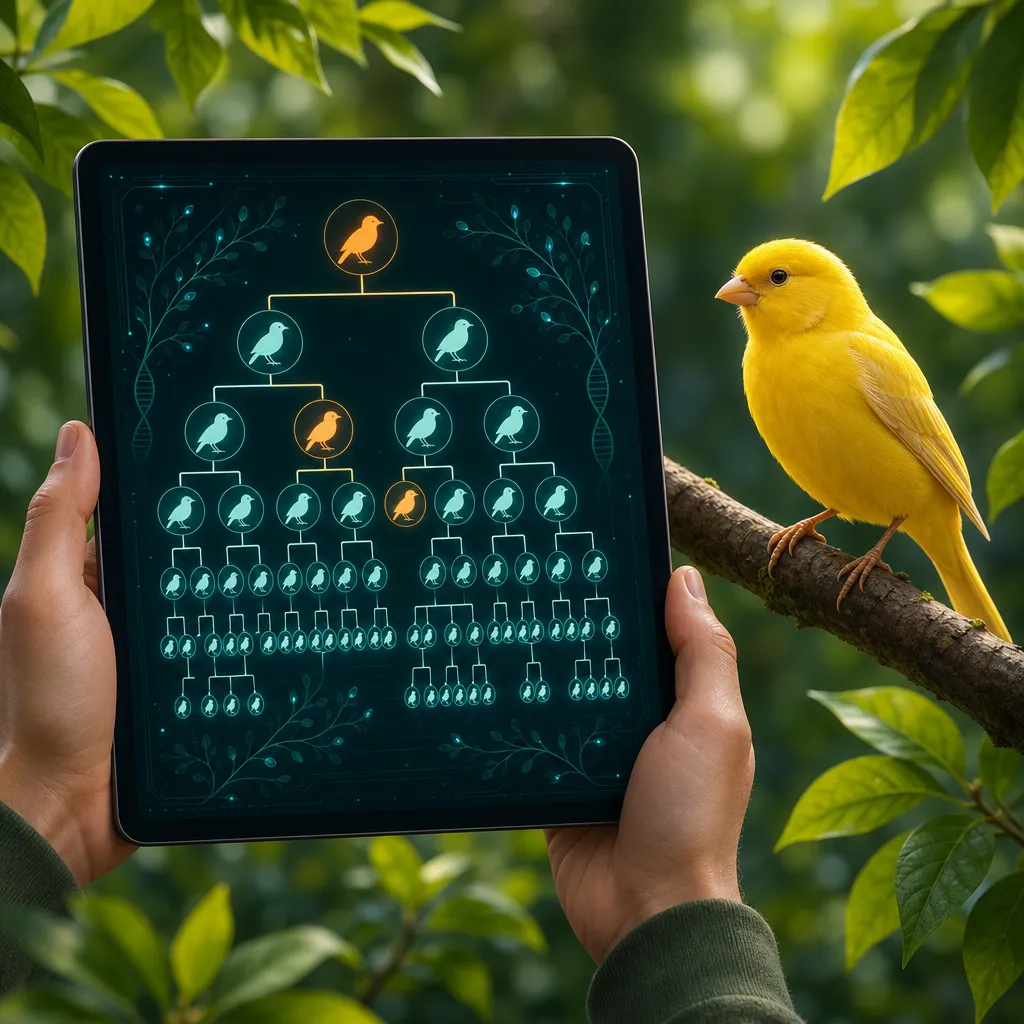
The traditional pedigree — a sheet of paper with names and rings — is useful, but limited. A digital pedigree gives you much more:
- Complete traceability up to 10 generations for each subject
- Automatic calculation of the inbreeding coefficient
- Detection of common ancestors between two potential breeders
- Genetic maps showing the transmission of visible and hidden traits
- Professional prints of subject records and family trees
When you manage 50, 100 or more subjects, having all this on paper is impossible. Digital allows you to see in a second if two canaries are related, what their estimated F coefficient is, and which traits they might transmit.
5. Simulating Pairings Before Making Them
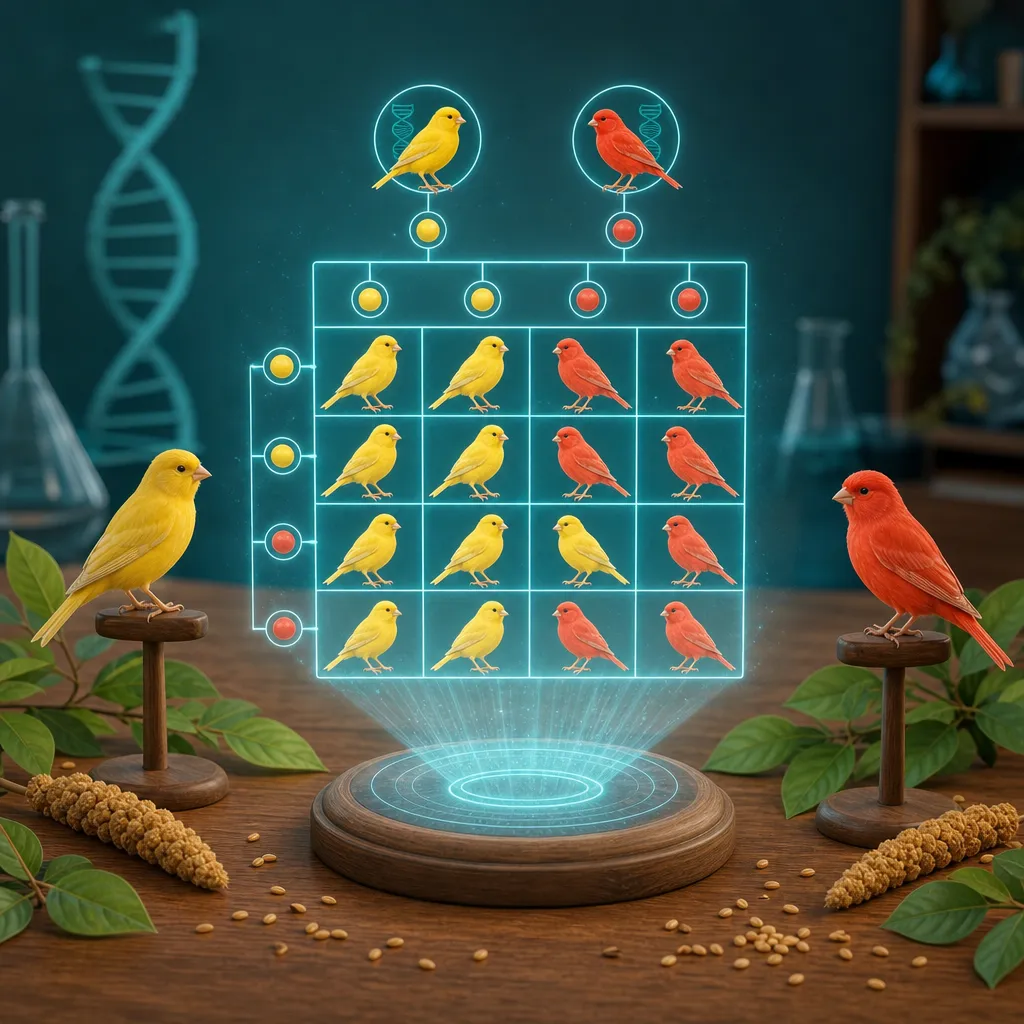
This is the most powerful part of genetics applied to breeding. Enter the genotypes (or known phenotypes) of male and female, and the simulator returns:
- The percentage distribution of expected phenotypes in the offspring
- The possible genotypes for each phenotype (useful to know who is a carrier)
- The probability of each plumage color
- The estimated F coefficient for the offspring (if parents are related)
Real scenario: you have an intensive yellow female carrying frost and a recessive white male. You want to know how many chicks will be born white? The simulator tells you: 50% recessive white, 50% yellow carriers of white. Without simulation, you'd have to wait for the breeding season to find out.
6. The 5 Most Common Mistakes (and How to Avoid Them)
Mistake 1: Not considering healthy carriers
A canary that doesn't show a recessive trait can still transmit it. If you don't know that your best male carries an undesirable gene, you'll only find out when the chicks are born.
Mistake 2: Pairing without calculating inbreeding
"They're father and daughter but they look fine" — the problem doesn't appear in the first generation. It manifests after 2-3 generations of uncontrolled inbreeding.
Mistake 3: Not recording pedigrees completely
Without a complete history, every breeding season you start from scratch. You don't know who is related to whom, and you lose valuable information.
Mistake 4: Choosing breeders based only on phenotype
Two beautiful canaries can produce mediocre offspring if both carry undesirable recessive genes. Genotype counts as much as phenotype.
Mistake 5: Ignoring sex-linked factors
Some traits (like mosaic) are linked to the Z chromosome. Females, having only one Z chromosome, directly express the trait; males can be carriers without showing it.
7. Where to Start with the Right Tools
Today there are digital tools designed for breeders who want to work professionally without becoming geneticists. Here's what to look for:
- Interactive pedigree — explorable family tree up to 7-10 generations
- Automatic F calculation — instant inbreeding coefficient
- Pairing simulator — with percentage prediction of phenotypes
- Health tracking — to record vet visits and conditions
- Genetic database — with documented canary breeding mutations
- Feeding management — to track diets and supplements
Try GenHub free tools
Simulate genetic pairings and calculate inbreeding, then sign up to unlock the full breeding software.
Read also: Canary Breeds Guide · Canary Pairing Guide · Canary Feeding Guide · Canary Diseases Guide
Have questions about canary genetics? Contact us for personalized advice.
Content created with AI support and human editorial review.