
Canaries are resilient animals, but like all caged birds they are subject to various conditions. Prevention is the most powerful weapon: good hygiene, proper feeding and regular check-ups substantially help reduce disease risk. Here's how to recognize symptoms and what to do.
⚠️ Important disclaimer: This guide is for informational purposes only. If your canary shows severe symptoms, contact an exotic animal veterinarian immediately. Do not administer medication without a professional diagnosis.
In this guide:
1. How to Recognize a Sick Canary
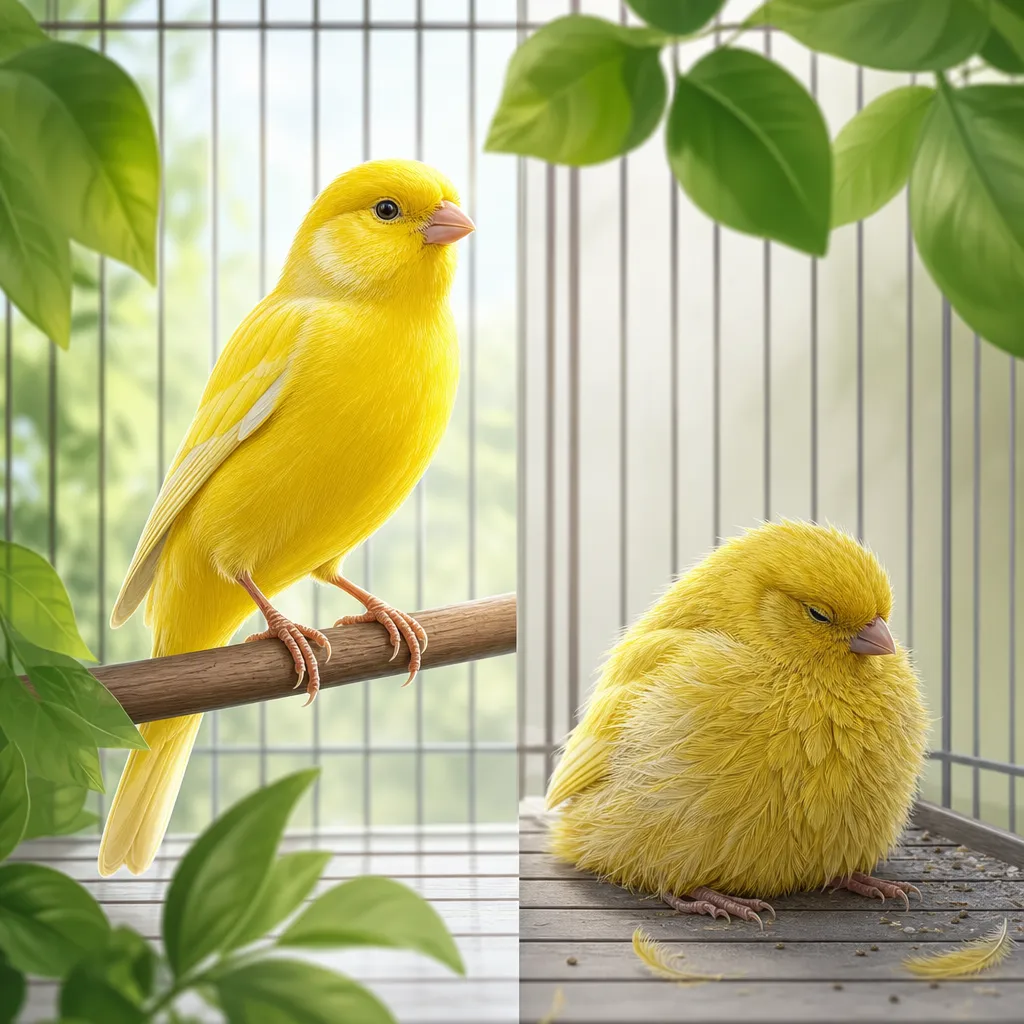
Canaries hide symptoms until the disease is advanced (survival instinct: in the wild a sick bird is attacked by predators). You must observe every day:
Behavioral signs
- Lethargic, no longer sings
- Sitting on the bottom of the cage
- Constantly puffed-up and ruffled plumage
- Hiding head under wing during the day
Physical signs
- Weight loss (prominent keel bone)
- Liquid, greenish, or bloody droppings
- Open-beak breathing, panting
- Crusts on legs, beak or eyes
2. External Parasites: Mites and Mange
2.1 Red mite (Dermanyssus gallinae)
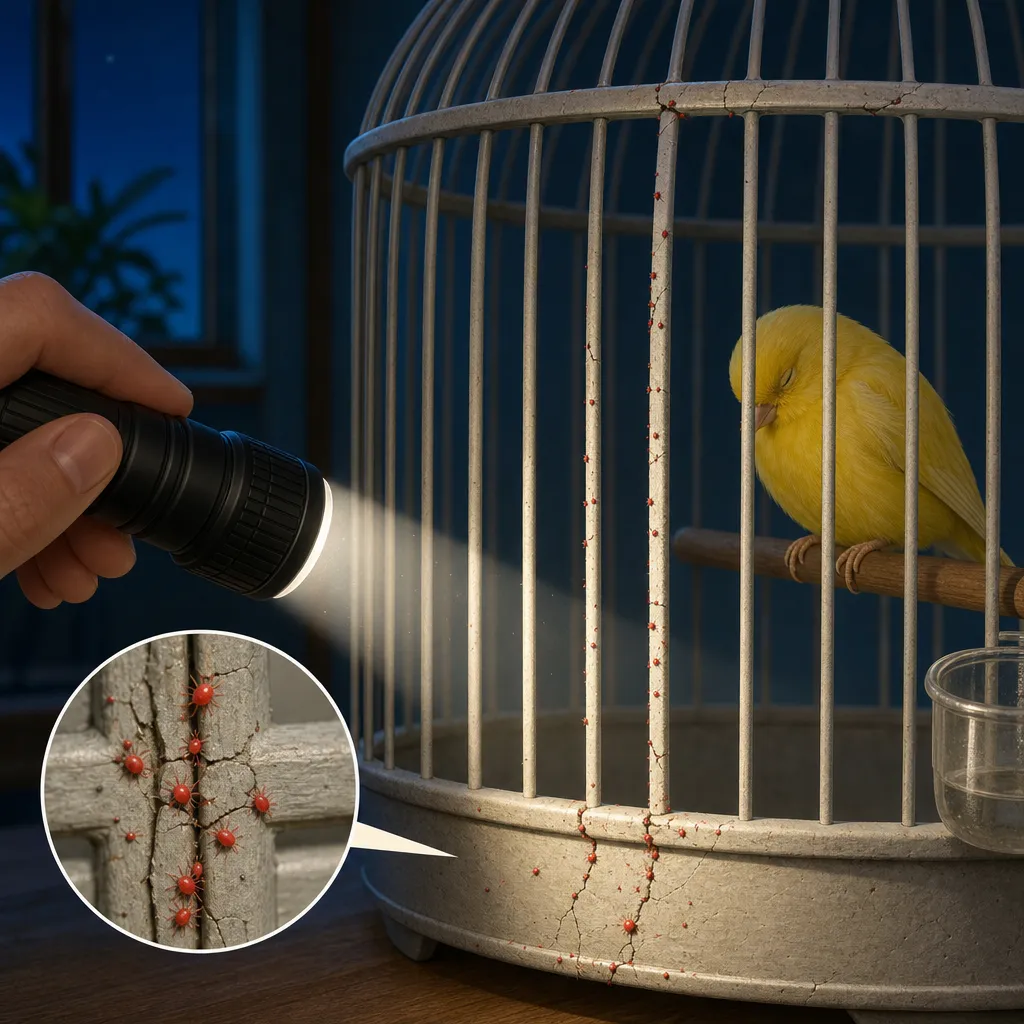
The most common and dangerous mite. It hides in cage crevices during the day and comes out at night to suck blood.
- Symptoms: Restless canary at night, anemia (pale legs and beak), dead chicks in the nest with no apparent cause
- Diagnosis: At night, shine a flashlight on the cage and pass a white tissue in the crevices: you'll see moving red dots
- Treatment: Treat cages and the environment with bird-safe products chosen with your vet; do not improvise active ingredients or doses.
- Prevention: Clean cages weekly with water and vinegar, replace perches regularly
2.2 Scaly leg mite (Cnemidocoptes pilae)
Microscopic mite that digs tunnels in the keratin layer of legs and beak.
- Symptoms: Whitish crusts and skin thickening on legs and toes. In advanced cases, toes become deformed
- Treatment: Paraffin oil or petroleum jelly on the legs can help smother surface mites; severe cases need veterinary assessment (systemic drugs only on prescription).
2.3 Feather and tracheal mites
- Feather mites: Broken and chewed feathers. The canary plucks itself. Treatment with antiparasitic spray
- Tracheal mite (Sternostoma tracheacolum): Wheezing, sneezing, head shaking. Requires veterinary diagnosis and ivermectin
Go deeper on diagnosis and prevention in the dedicated mites guide. If the main issue is feather loss, see also the feather loss guide.
3. Respiratory Diseases
3.1 Mycoplasmosis / CRD (Chronic Respiratory Disease)
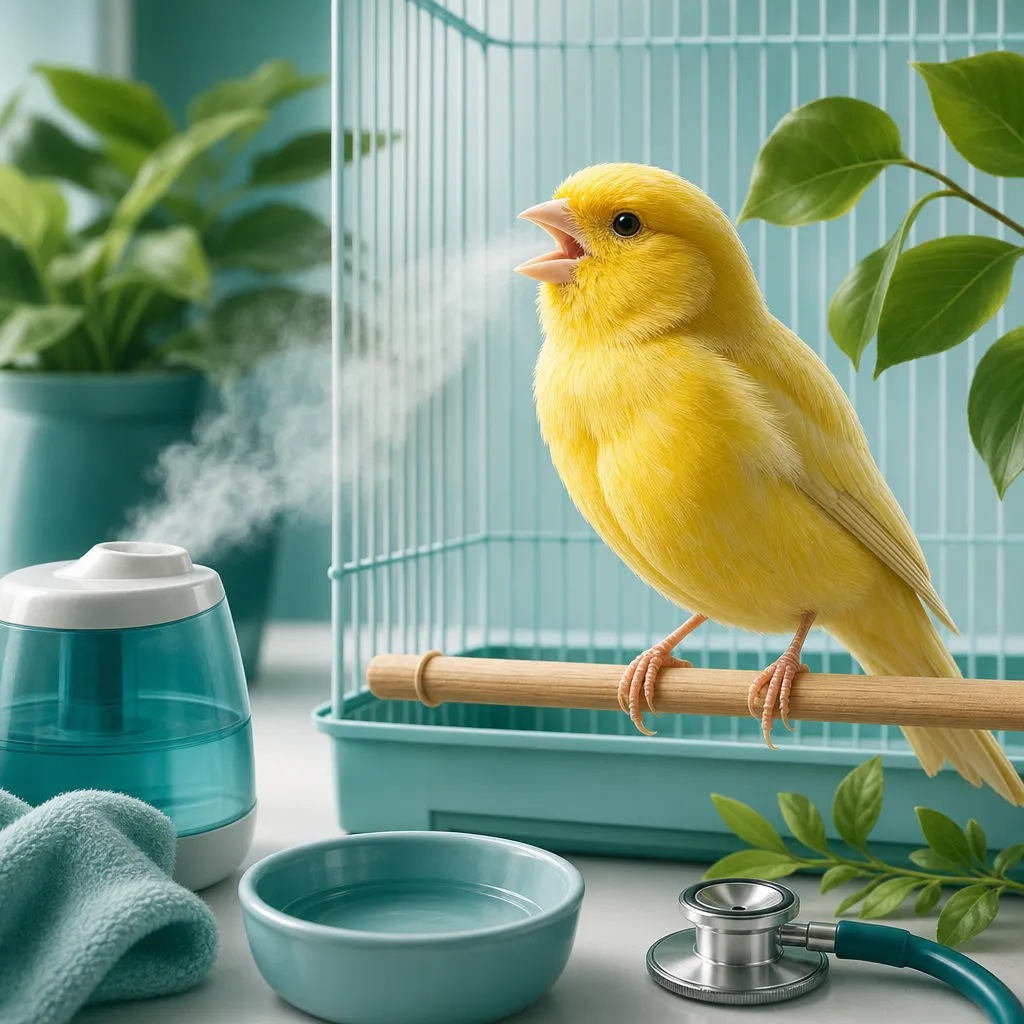
One of the most frequent conditions. The bacterium Mycoplasma gallisepticum affects the respiratory tract.
- Symptoms: Sneezing, nasal discharge, swollen and watery eyes, noisy breathing, weight loss
- Transmission: Airborne, highly contagious between nearby cages
- Treatment: Any antibiotic therapy only after diagnosis and prescription by an avian vet — never self-medicate or follow generic schedules.
- Prevention: Avoid drafts and temperature swings. Quarantine for new subjects (at least 15-20 days)
3.2 Aspergillosis
Fungal infection caused by Aspergillus fumigatus, present in moldy feed and damp bedding.
- Symptoms: Severe difficulty breathing, open beak, loss of voice, rapid weight loss. Often fatal
- Prevention: Never use moldy seeds. Keep bedding dry. Good room ventilation
4. Digestive System Diseases
4.1 Coccidiosis
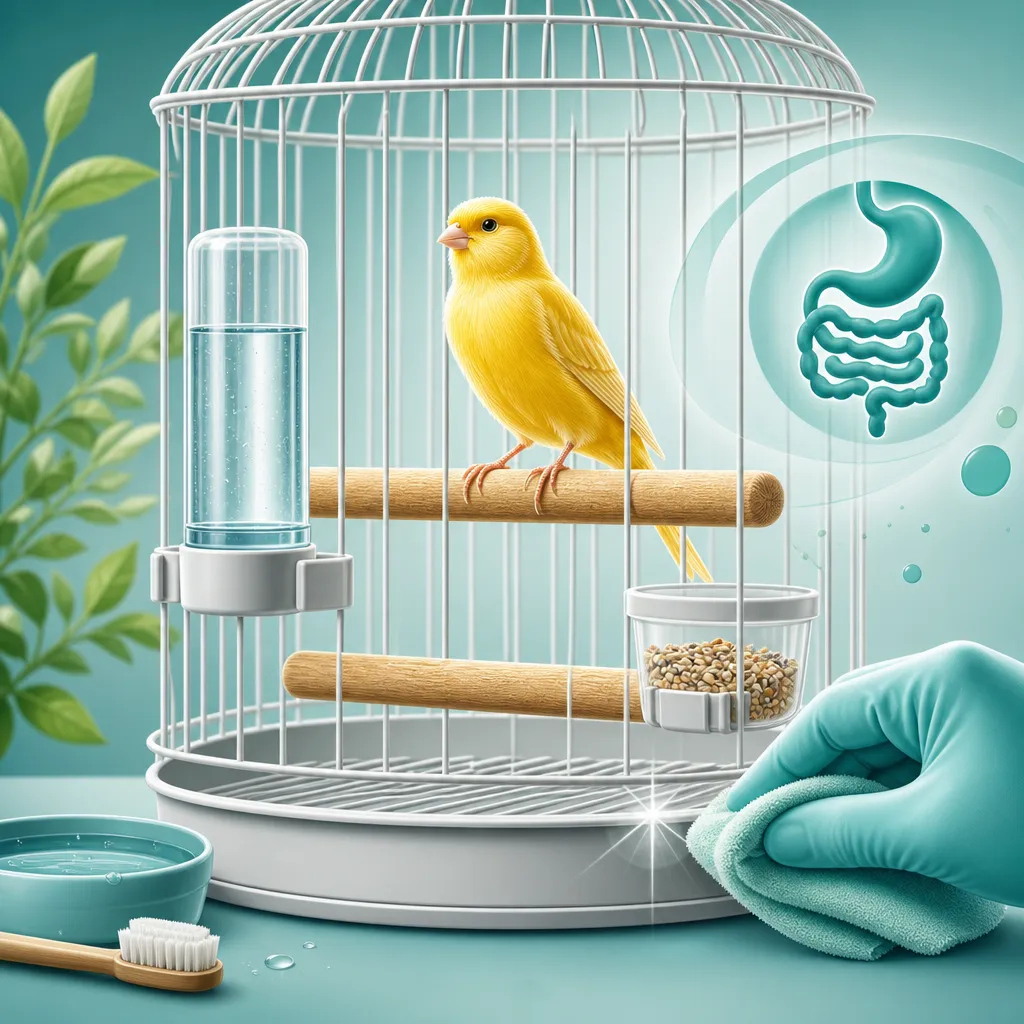
Intestinal parasites (protozoa of the genus Eimeria) that attack the intestinal mucosa. Full detail: coccidiosis guide.
- Symptoms: Diarrhea (sometimes with blood), ruffled plumage, lethargy, rapid weight loss
- Treatment: Thorough cage cleaning; anticoccidials only if prescribed by a veterinarian (drug, cycle and dose are professional decisions).
- Prevention: Feeder hygiene, do not leave moist food in the cage
4.2 Salmonellosis
Severe and highly contagious bacterial infection.
- Symptoms: Greenish diarrhea, extreme weight loss, swollen joints ("drooping wings"), sudden death
- Treatment: Isolate the bird immediately and see an avian vet for diagnosis and therapy — no DIY antibiotics.
- Warning: Salmonellosis is a zoonosis (can be transmitted to humans). Always wash hands after handling the canary
4.3 Enteritis / Diarrhea
- Causes: Poor diet, dirty water, stress, bacteria
- Symptoms: Liquid droppings, soiled plumage around the cloaca
- Treatment: Suspend fruit and vegetables for 2-3 days. Administer probiotics in water. If it persists beyond 48 hours → vet
5. Nutritional Deficiencies
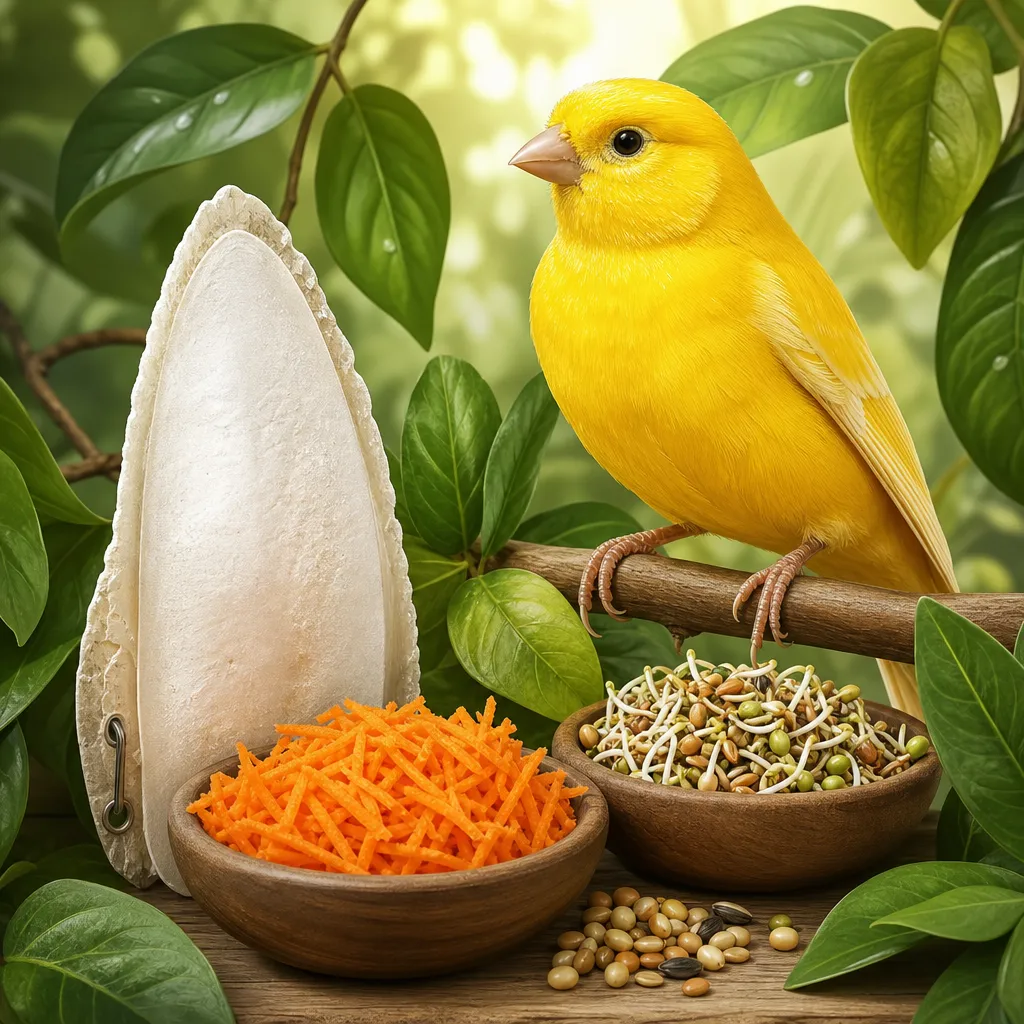
| Deficiency | Symptoms | Remedy |
|---|---|---|
| Vitamin A | Swollen eyes, crusts around beak, recurrent infections | Grated carrot, chicory, dandelion |
| Vitamin D3 | Soft-shell eggs, fragile bones, rickets in chicks | Sun exposure (not direct!), cuttlebone |
| Vitamin E | Sterility, weak chicks, paralysis | Sprouted seeds, egg-based soft food |
| Calcium | Shell-less eggs, weak legs, stunted growth | Cuttlebone, mineral grit, calcium carbonate |
| Iodine | Enlarged thyroid (goiter), difficulty swallowing | Iodized salt block, iodine drops in water |
| Protein | Dull and fragile plumage, slow growth in chicks | Soft food, hard-boiled egg, sprouted seeds |
6. Symptoms → Cause → Remedy Table
| Symptom | Probable cause | Severity | Immediate action |
|---|---|---|---|
| Puffed plumage and lethargy | Ongoing infection, cold, stress | Medium | Warm up (lamp 25-28°C), isolate, observe 24h |
| Liquid greenish diarrhea | Coccidiosis, salmonellosis, enteritis | High | Suspend fruit and vegetables, vet within 24-48h |
| Open-beak labored breathing | Mycoplasmosis, aspergillosis, tracheal mite | High | Immediate vet. Isolate. Therapy only on prescription |
| Crusts on legs / toes | Scaly leg mite (Cnemidocoptes) | Low | Paraffin oil or petroleum jelly on legs |
| Weight loss (prominent keel) | Internal parasites, tumors, chronic diseases | High | Vet. Fecal exam. Possible deworming |
| Dead chicks in nest | Red mite, bacterial infection, inbreeding | High | Inspect nest at night. Disinfect everything |
| Sneezing and nasal discharge | Cold, mycoplasmosis, foreign body | Medium | Warm up, vitamins in water. If persistent → vet |
| Broken feathers, self-plucking | Feather mites, stress, protein deficiency | Low | Antiparasitic spray, improve diet |
| Pale legs and beak | Anemia (red mite, internal bleeding) | High | Treat for mites immediately. Vet |
| Swollen eyes / conjunctivitis | Mycoplasmosis, vitamin A deficiency, trauma | Medium | Bird eye drops. Vet if bilateral |
7. Daily Prevention: 10 Golden Rules

- Quarantine for new arrivals: 15-20 days in a separate cage, in another room. Observe every day before introducing to the others
- Daily hygiene: Change water every day. Remove leftover food. Clean cage floor
- Weekly deep cleaning: Wash cage, perches and feeders with hot water and white vinegar (no bleach: residues are toxic to lungs)
- Proper feeding: Fresh seeds, soft food, washed vegetables and fruit. Never moldy food
- Avoid drafts: Place cages away from windows and doors. Stable temperature around 18-22°C
- No to smoke and sprays: Canary lungs are extremely sensitive. No cigarette smoke, spray deodorants, perfumes, paint in the room
- Daily observation: Dedicate 5 minutes a day to observe each subject. You'll immediately notice if something is wrong
- Periodic fecal check: Once a month, collect a fecal sample and have it analyzed by the vet to rule out intestinal parasites
- Limit stress: No loud noises, sudden movements, domestic predators (cats) near cages
- Manage inbreeding: A high COI weakens the immune system. Use GenHub to monitor pedigree and choose safe pairings
8. Recommended First Aid Kit
Every breeder should always have on hand:
- Bird antiparasitic spray (pyrethrum)
- Paraffin oil (for scaly leg mite)
- Probiotics powder
- Quarantine cage
- Heat lamp (25-28°C)
- Multivitamin drops (vitamins A, D3, E)
- Sterile saline solution (for eyes)
- White vinegar (for cage cleaning)
- Exotic animal vet phone number
- Disposable gloves (for handling sick subjects)
Try GenHub free tools
Simulate genetic pairings and calculate inbreeding, then sign up to unlock the full breeding software.
Canary diseases: common signs and when to act
Look for mites, feather loss, lethargy, wet droppings or laboured breathing. Isolate the bird, check hygiene and food, then use the symptom tables below — or a vet if signs worsen fast.
Also read: Mites · Coccidiosis · Feather loss · Moult · Feeding Guide · Pairing Guide · Breed Guide
Sources and further reading
General references on bird health and welfare:
Content drafted with AI support and human editorial review.