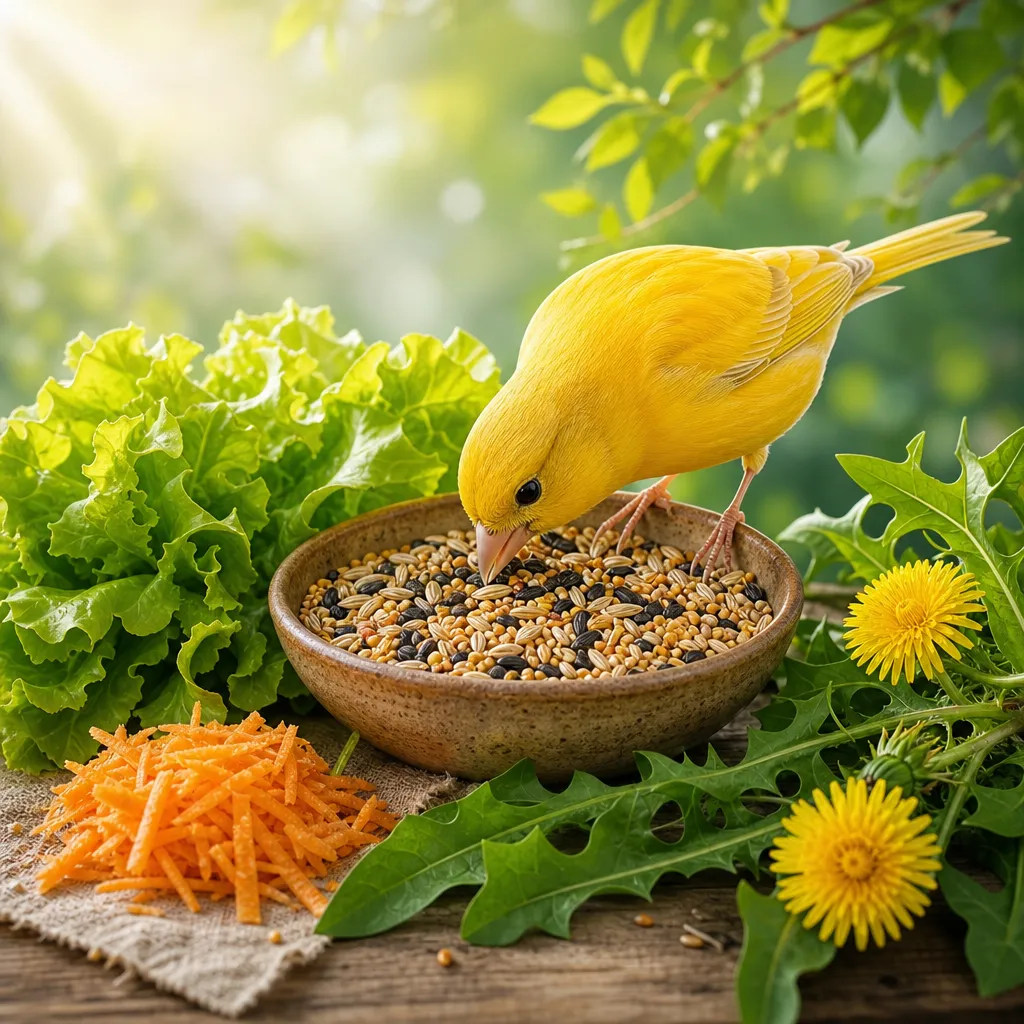
Canary feeding is the pillar of a healthy aviary. A correct diet affects health, fertility, plumage quality and longevity. In the wild the canary is granivorous and eats seeds, grasses, sprouts and occasionally small insects. In captivity we must replicate this variety with a balanced diet that changes according to the season.
In this guide:
1. Canary Diet Basics
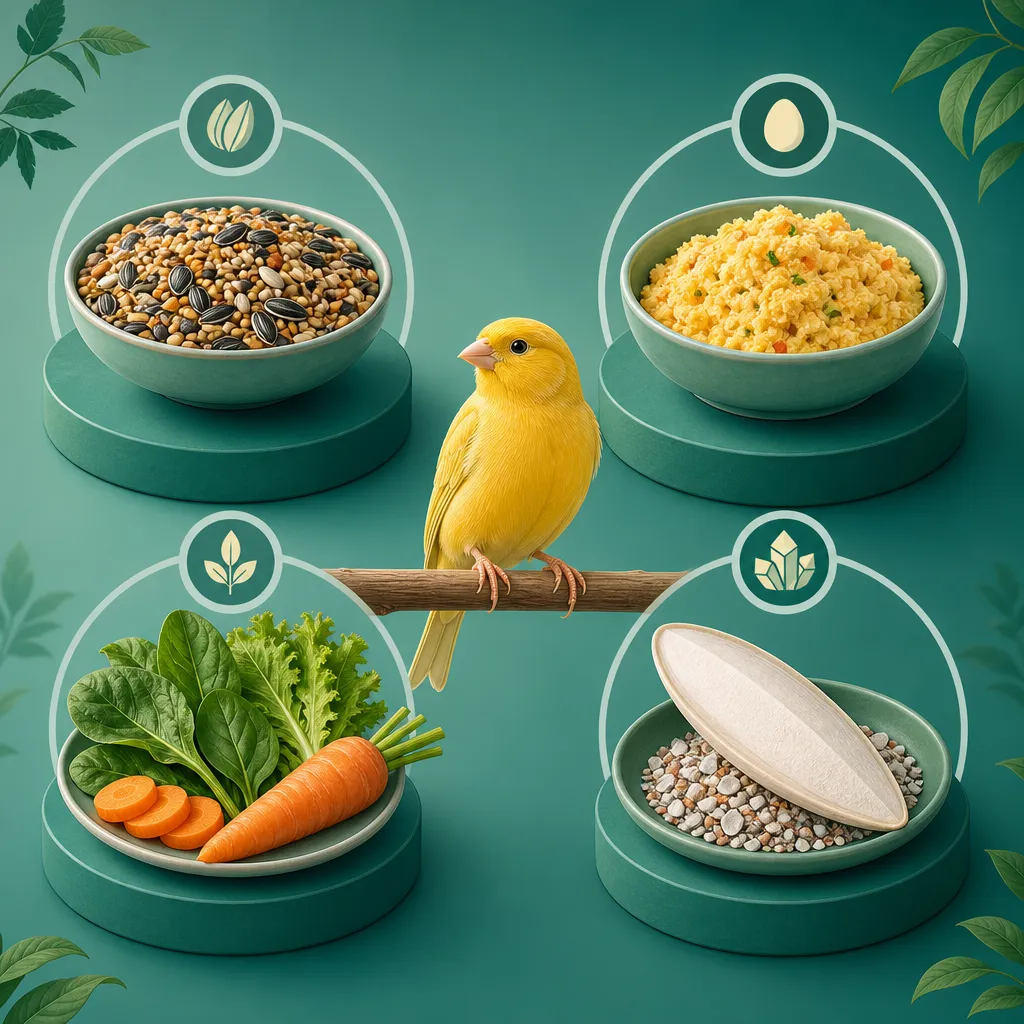
The ideal canary diet consists of four fundamental elements:
1. Seed mixes (50-60%)
Diet base. They provide carbohydrates, fats and plant proteins. The mix should vary according to the season.
2. Soft food (20-30%)
Essential protein-rich food during breeding and molting. Made with eggs, breadcrumbs, flours and seeds.
3. Fruit and vegetables (10-15%)
Vitamins, minerals and fiber. Essential year-round, but be careful which ones to choose.
4. Supplements and grit (5%)
Cuttlebone, mineral grit, calcium carbonate. Essential for digestion and eggshell formation.
2. Seeds: The Heart of the Diet
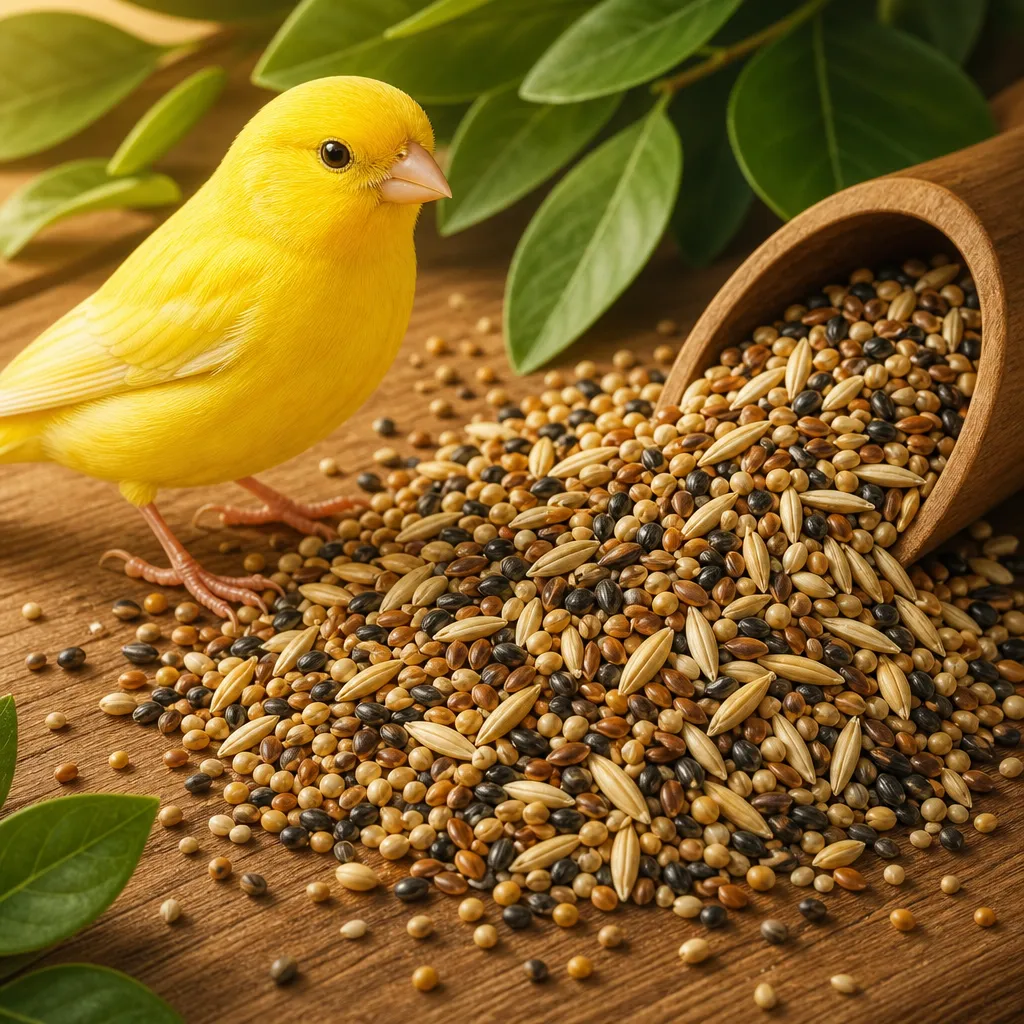
Not all seeds are equal. Here are the most important ones and their role:
| Seed | Role | % in base mix |
|---|---|---|
| Canary seed | The main seed. Rich in carbohydrates, easily digestible | 40-50% |
| Millet | Rich in plant proteins. Perfect for chicks and fledglings | 15-20% |
| Hulled oats | Quick energy. Increase in winter and molting | 10-15% |
| Flax | Rich in omega-3. Excellent for glossy plumage | 5-8% |
| Niger | Very energetic. Stimulates breeding instinct | 5-8% |
| Hemp | High protein content. Use in moderation | 3-5% |
| Small sunflower | Unsaturated fats. Limit to avoid obesity | 2-3% |
| Rape (colza) | Stimulates singing in males. Small quantities | 2-3% |
Tip: Buy last harvest seeds, not old ones. Old seeds lose nutritional value and risk mold. Store them in a cool, dry place, away from light. An opened bag lasts a maximum of 3-4 months.
3. Soft Food: The Protein-Rich Food
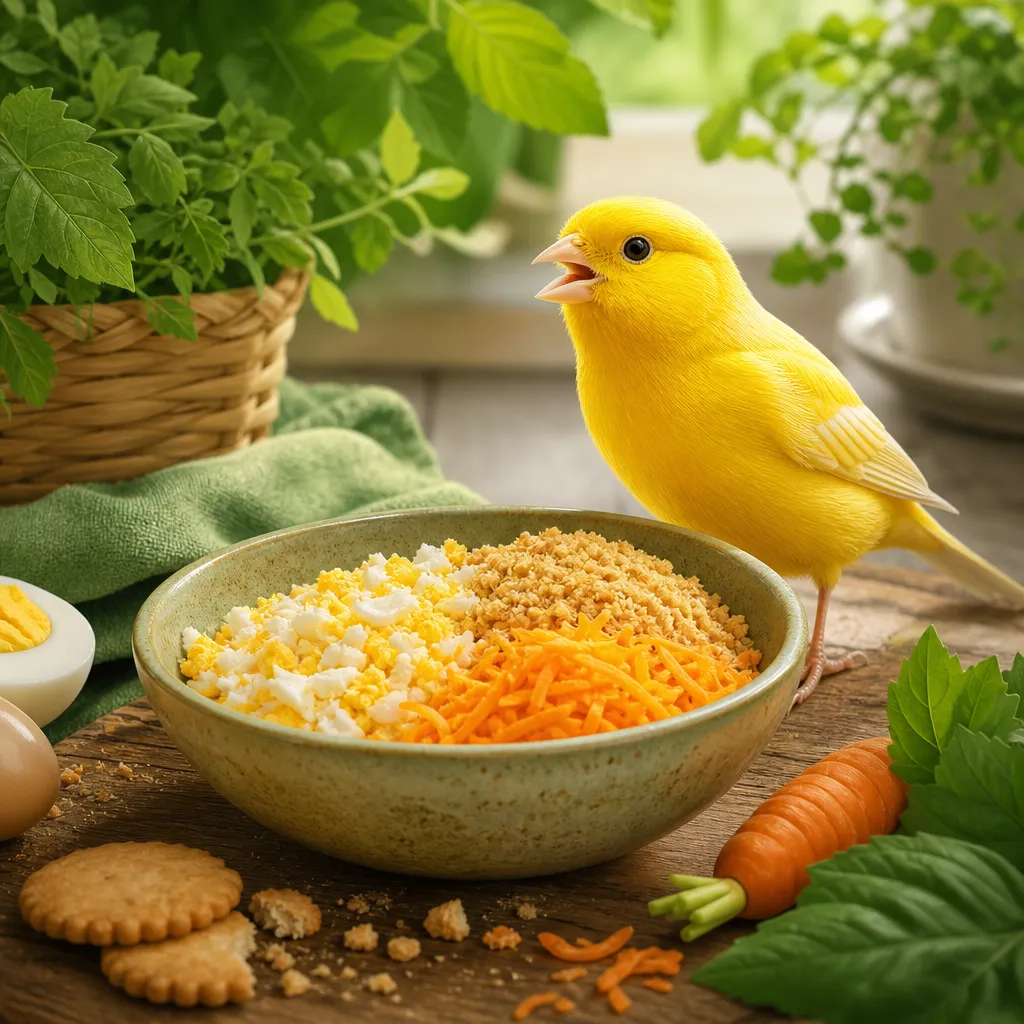
Soft food is a soft and moist food made with egg, breadcrumbs, corn flour and crushed seeds. It's the most important food during breeding and rearing.
Dry vs moist soft food
- Dry soft food (commercial): Practical, long shelf life. Add a few drops of water or grated apple to make it more appetizing
- Moist soft food (homemade): Grated hard-boiled egg + crumbled breadcrumbs + crushed seeds + grated carrot. Consume within the day (ferments easily with heat)
When to administer it
| Period | Frequency | Quantity |
|---|---|---|
| Breeding | Every day | 2-3 times a day, small quantities |
| Molting | Every day | 1-2 times a day |
| Rest (winter) | 2-3 times a week | Once a day, small quantity |
4. Seasonal Diet
Canary nutritional needs change radically with the seasons. Here's how to adapt the diet:
❄️ Winter (November-January) — Rest
- Base mix: canary seed 50%, millet 20%, oats 15%, flax 5%, rape 5%, niger 3%, hemp 2%
- Soft food: only 1-2 times a week, little
- Vegetables: chicory, radicchio (for vitamin C)
- Goal: maintenance, avoid weight gain. Reduce fats
🌱 Spring (February-May) — Breeding
- Mix: increase protein: millet 30%, canary seed 40%, niger 8%, hemp 5%, flax 7%
- Sprouted seeds: every day (rich in vitamin E = fertility)
- Soft food: 2-3 times a day, fresh
- Hard-boiled egg: 2-3 times a week (extra protein)
- Cuttlebone: always available (calcium for shells)
☀️ Summer (June-August) — Post-breeding
- Mix: back to base: less niger and hemp
- Fresh vegetables: every day (romaine lettuce, cucumber, zucchini)
- Fruit: apple, pear, peach — small quantities for hydration
- Soft food: gradually reduce
🍂 Autumn (September-October) — Molting
- Mix: oats 20%, flax 10% (for plumage), canary seed 40%
- Soft food: every day, rich in protein to rebuild feathers
- Vegetables: grated carrot (beta-carotene for warm colors)
- Sprouted seeds: 3-4 times a week
5. Fruit and Vegetables: Which to Choose
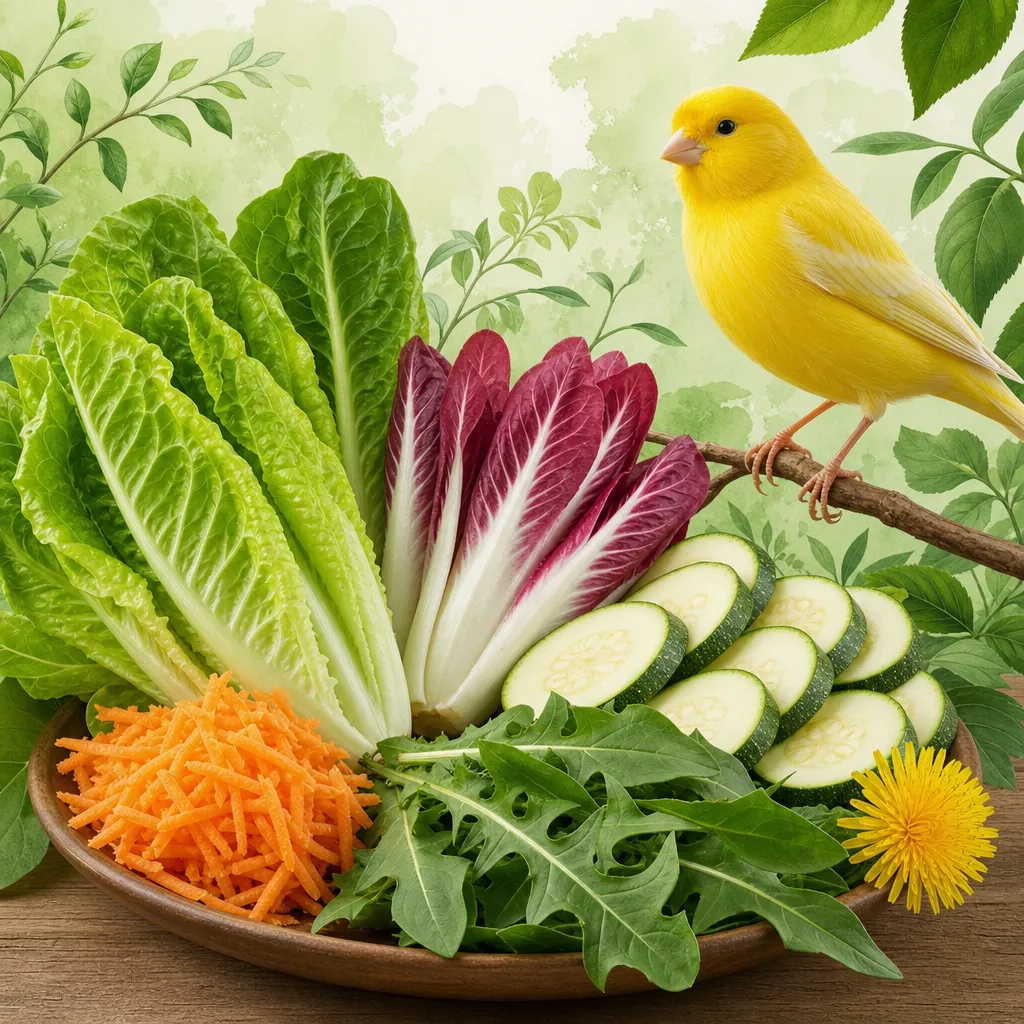
Recommended vegetables (every day)
| Vegetable | Benefit | Frequency |
|---|---|---|
| Romaine lettuce | Hydration, fiber | Every day |
| Chicory / catalogna | Vitamin C, depurative | Every day |
| Carrot (grated) | Beta-carotene, plumage color | 3-4 times/week |
| Zucchini | Light, hydrating | 2-3 times/week |
| Cucumber | Water, refreshing in summer | 2-3 times/week |
| Spinach (cooked) | Iron, calcium | 1-2 times/week |
| Dandelion | Depurative, wild | Every day |
| Broccoli (tips) | Vitamin K, calcium | 1-2 times/week |
| Radicchio | Antioxidant, winter | 2-3 times/week |
Recommended fruit (2-3 times a week)
| Fruit | Benefit |
|---|---|
| Apple (seedless) | Fiber, vitamins. Grated or wedges |
| Pear | Hydrating, low acidity |
| Peach / Apricot | Beta-carotene, sweet and appreciated |
| Fresh figs | Quick energy, calcium. Only in season |
| Melon | Refreshing in summer, rich in water |
| Banana | Energy. Small quantities (high sugar) |
6. Toxic and Forbidden Foods
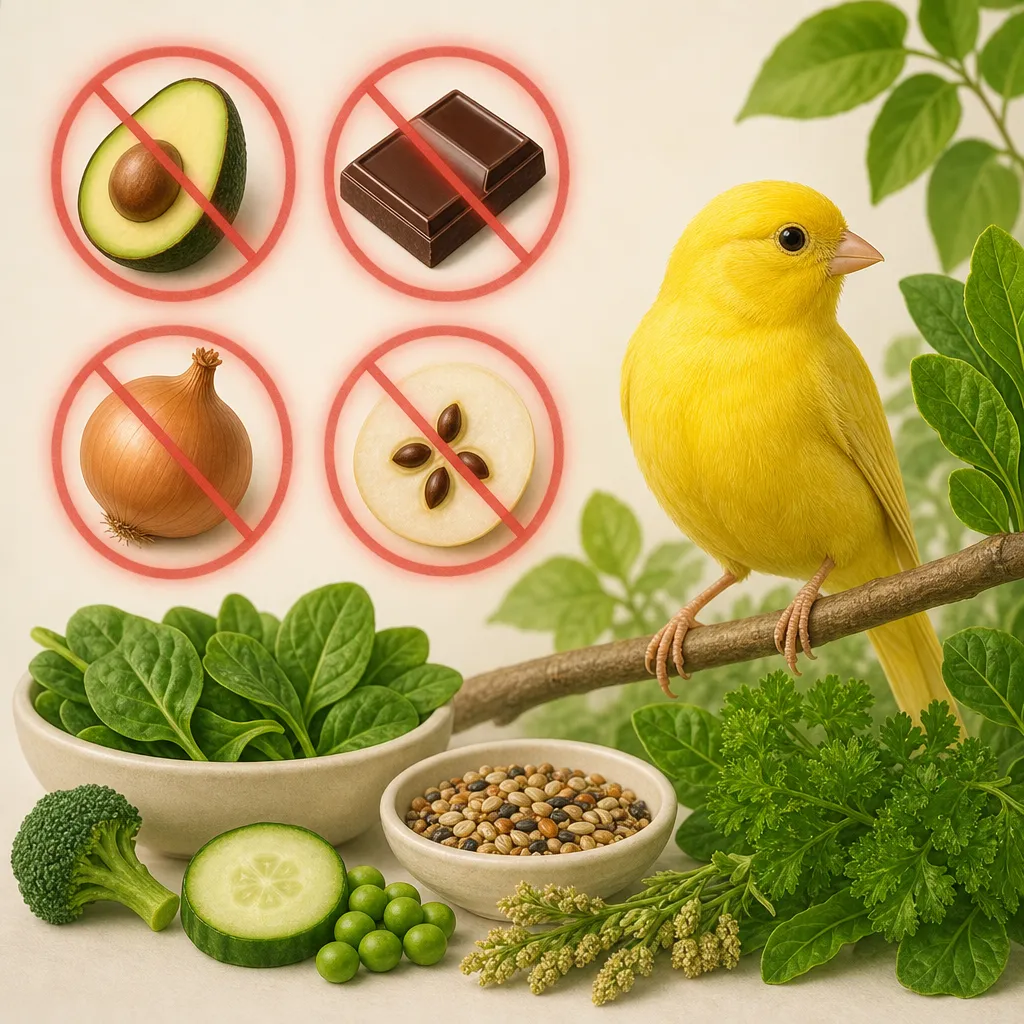
⚠️ NEVER give these foods to your canaries:
| Food | Why it's dangerous |
|---|---|
| Avocado | Contains persin, a lethal toxic substance for birds |
| Chocolate | Theobromine: lethal. Never, not even crumbs |
| Onion and garlic | Cause hemolytic anemia (destruction of red blood cells) |
| Apple and pear seeds | Contain cyanide. Always remove seeds |
| Alcohol | Lethal in very small doses |
| Caffeine (coffee, tea) | Toxic to birds' nervous system |
| Salt and salty foods | Canary kidneys cannot tolerate salt |
| Milk and dairy | Canaries cannot digest lactose |
| Raw mushrooms | Toxic to the liver |
| Tomato and potato leaves | Contain solanine, toxic |
7. Supplements and Minerals
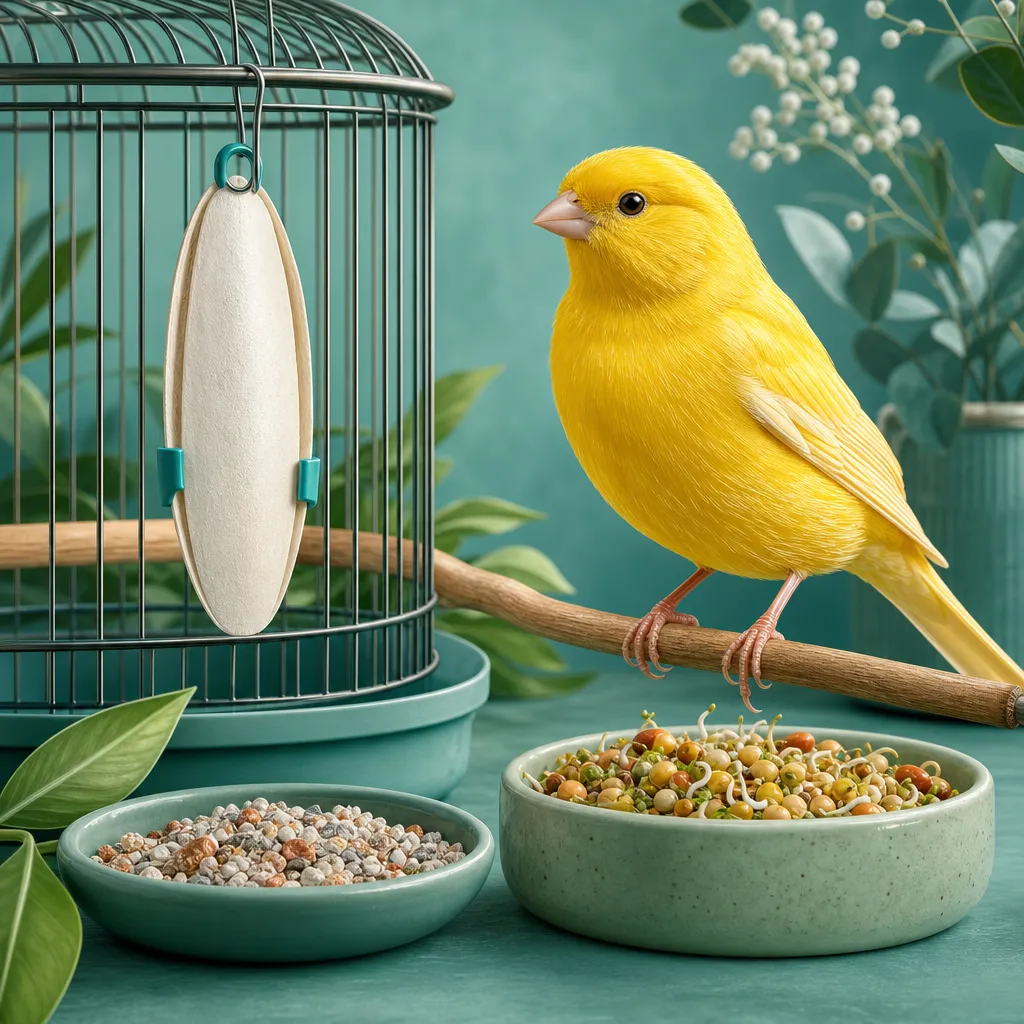
- Cuttlebone: Calcium source. Always leave it available. Essential for laying hens
- Mineral grit: Small pebbles that aid mechanical digestion of seeds in the gizzard. Essential: canaries have no teeth and use grit to "grind" seeds
- Calcium carbonate: In powder, to add to soft food during breeding. Helps shell formation
- Vitamin E: Contained in sprouted seeds. Essential for fertility in both sexes
- Beta-carotene: For red and orange canaries (carrot, red pepper, canthaxanthin)
- Amino acids (lysine, methionine): During molting, help rebuild feathers
8. Water and Hygiene
- Fresh water every day — Change every morning. Bacteria proliferate within hours in stagnant water
- External or siphon drinker — Never open bowl (gets dirty with droppings and feed)
- Tap water — Let it sit for 1-2 hours to let chlorine evaporate. Or use natural mineral water (not sparkling!)
- Vitamins in water — In winter, add multivitamin drops 1-2 times a week
- Clean feeders — Wash with hot water and vinegar (no detergents!) every week
9. Common Mistakes to Avoid
❌ Only seeds, always
Seeds alone are not enough. An exclusively seed-based diet leads to deficiencies in vitamins A, D, calcium and protein.
❌ Iceberg lettuce
Almost only water, zero nutrients. Can cause diarrhea if given in excess. Always use romaine lettuce, chicory or catalogna.
❌ Old or moldy seeds
Molds produce aflatoxins that destroy the liver. Always check the appearance and smell of seeds.
❌ Soft food left in the cage
Moist soft food ferments in 4-6 hours in the heat. Must be removed and replaced with fresh at each meal.
❌ Excess fats
Too many oily seeds (niger, hemp, sunflower) lead to obesity and liver problems. Respect mix percentages.
Try GenHub free tools
Simulate genetic pairings and calculate inbreeding, then sign up to unlock the full breeding software.
Food for canaries: the essentials
Base the diet on a quality seed mix, add soft food in moult and breeding, and offer safe fruit/veg. Avoid avocado, chocolate, salt and caffeine — see the chart in this guide.
Also read: Diet by phase calculator · Soft Food Guide · Moult Guide · Pairing Guide · Disease Guide · Breed Guide
Sources and further reading
General references on bird health and welfare:
Content drafted with AI support and human editorial review.