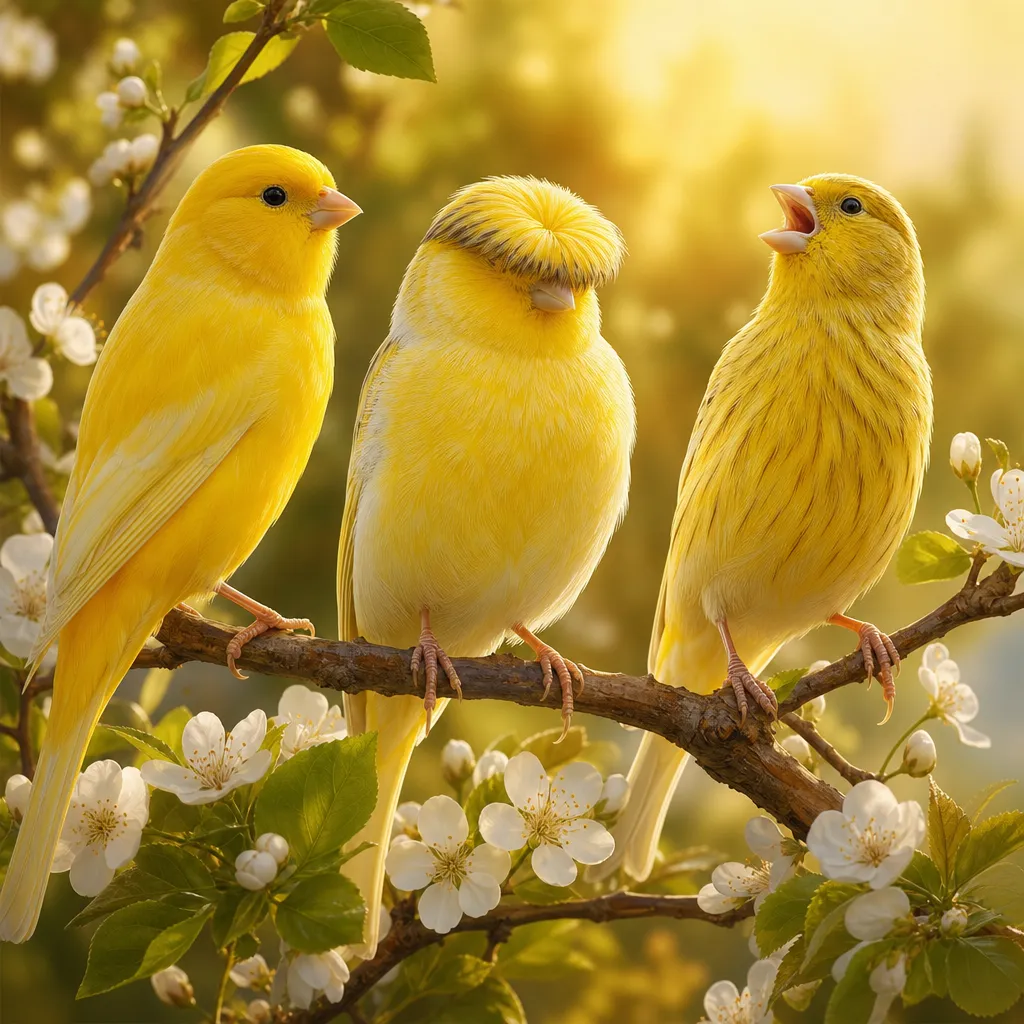
The domestic canary (Serinus canaria domestica) is the result of over five centuries of selection from the wild canary of the Canary Islands. Today there are dozens of breeds recognized internationally, divided into three major categories by the COM (World Ornithological Confederation): color canaries, shape and posture canaries, and song canaries.
In this guide we analyze each category, the main breeds and what sets them apart. If you're starting to breed or want to expand your aviary, this is the compass you need.
In this guide:
1. Color Canaries
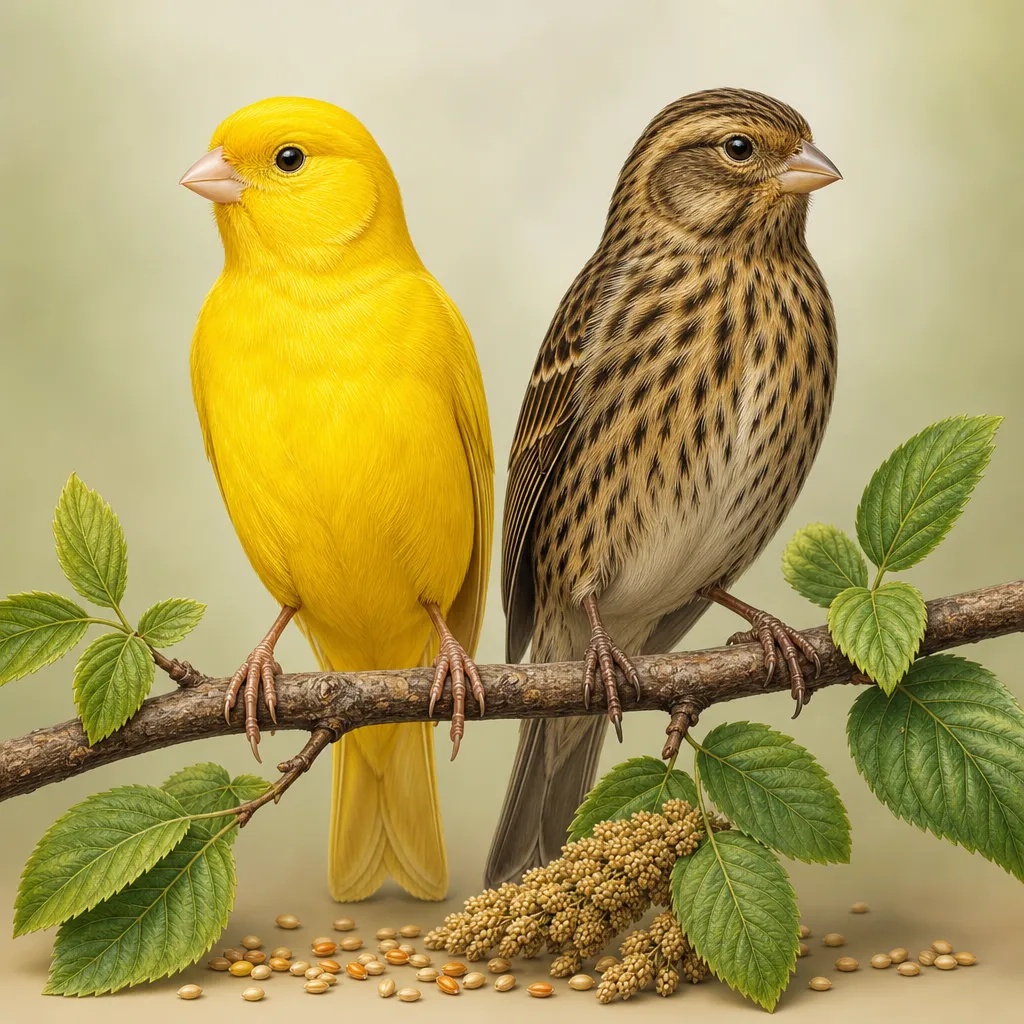
Color canaries are the most numerous and popular category among breeders. They are judged based on plumage, which is determined by two distinct genetic components: lipochrome (the background color) and melanin (pattern and striping).
1.1 Lipochrome Canaries
Lipochrome canaries are those in which melanin is almost or completely absent. Their plumage is uniform, without patterns or stripes. They are divided into:
- Yellow (or Brown) — The most classic, uniform intense yellow. Starting point for many other mutations.
- Red (or Ruby) — Obtained by crossing the canary with the Venezuelan Red Siskin. Red can range from copper to intense fire red.
- Dominant and recessive white — Dominant white has a single copy of the gene that masks all other colors. Recessive white requires two copies of the gene.
- Ivory (or Pastel) — Dilution of yellow and red, with softer, pastel tones.
- Mosaic — Lipochrome canaries where color is concentrated on the facial mask, wings and chest, with the rest of the body lighter. Sexual dimorphism is evident: females are much lighter.
1.2 Melanin Canaries
Melanin canaries show a clearly visible melanin component: striped pattern, dark flight and tail feathers, and often a dorsal pattern. The main categories are:
- Brown (or Black-Brown) — Black melanin on lipochrome background. The classic pattern: dorsal striping, black flights, dark legs.
- Agate — Diluted melanin: black becomes anthracite gray, the pattern is finer and more elegant. Light beak and legs.
- Isabella (or Brown-Isabella) — Diluted brown melanin, beige-café au lait tones. Very delicate effect.
- Saturnine (or Black-Saturnine) — Melanin concentrated in compact bands, very dark "mourning" effect.
- Topaz and Eumo — Rarer mutations with particular effects on melanin distribution.
- Opal and Onyx — Dilution or selective concentration effects on specific plumage areas.
Note for breeders: In color canaries, selection is guided by the breed standard defined by COM. Each mutation has a specific score based on color, pattern, size and posture. Using software like GenHub allows you to simulate pairings and predict the distribution of phenotypes in offspring — essential when working with multiple mutations simultaneously.
2. Shape and Posture Canaries
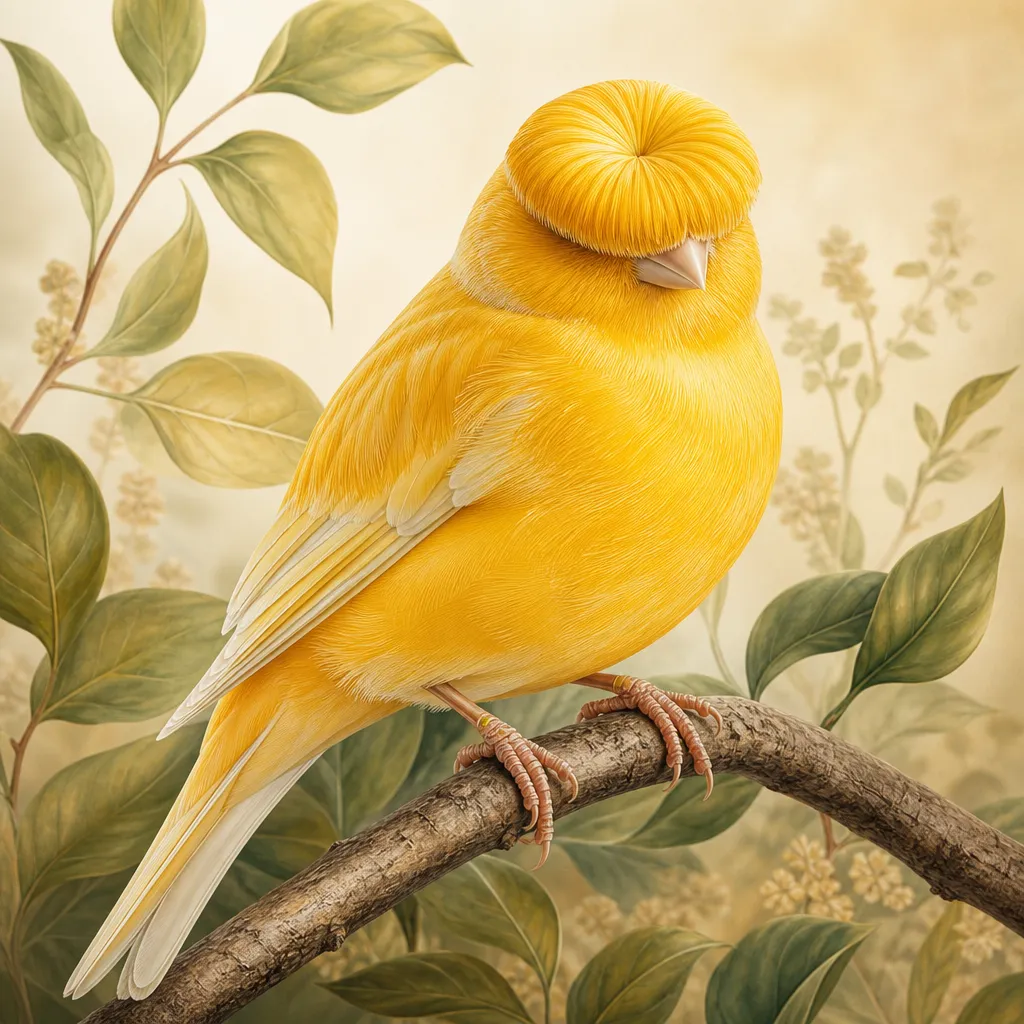
In this category, what counts is body shape, posture on the perch and plumage structure. Color is secondary. The main breeds are:
Gloster Fancy
Small English canary with a characteristic crest (corona) on its head. Also exists in the "consort" variety (without crest). Compact size, proud posture. One of the most beloved breeds worldwide. Dedicated guide →
Norwich
Medium-sized English canary, robust and rounded body, thick and soft plumage. The head is broad with a short beak. Very characteristic "ball-like" appearance.
Lizard
Very ancient English breed (1700s). Back with scale-like pattern ("spangling") on golden-yellow plumage. Yellow cap on the head. Scales renew at each molt.
Yorkshire
The largest of the English canaries. Long and slender body, long legs, upright and almost military posture. "Inverted comma" position on the perch.
Lancashire
Large size, imposing body. Exists in two varieties: with crest (coppy) and without crest (plain). The crest completely covers eyes and beak.
Border Fancy
Small-medium English canary, rounded and compact body. Smooth and close-fitting plumage. Considered the "gentleman" of canaries for its elegance.
Fife Fancy
Miniature version of the Border. Very small size (maximum 11 cm), teardrop body, lively posture. Perfect for breeders with limited space.
Gibber Italicus
Italian breed. Has a neck that bends in an "S" shape and semi-extended legs. One of the most original and recognizable canaries.
Frilled breeds
Category that includes the Parisian Frill, Padovano and Fiorino. Symmetrically frilled plumage on chest, flanks and back. Very spectacular "powder puff" effect. Fiorino guide →
3. Song Canaries
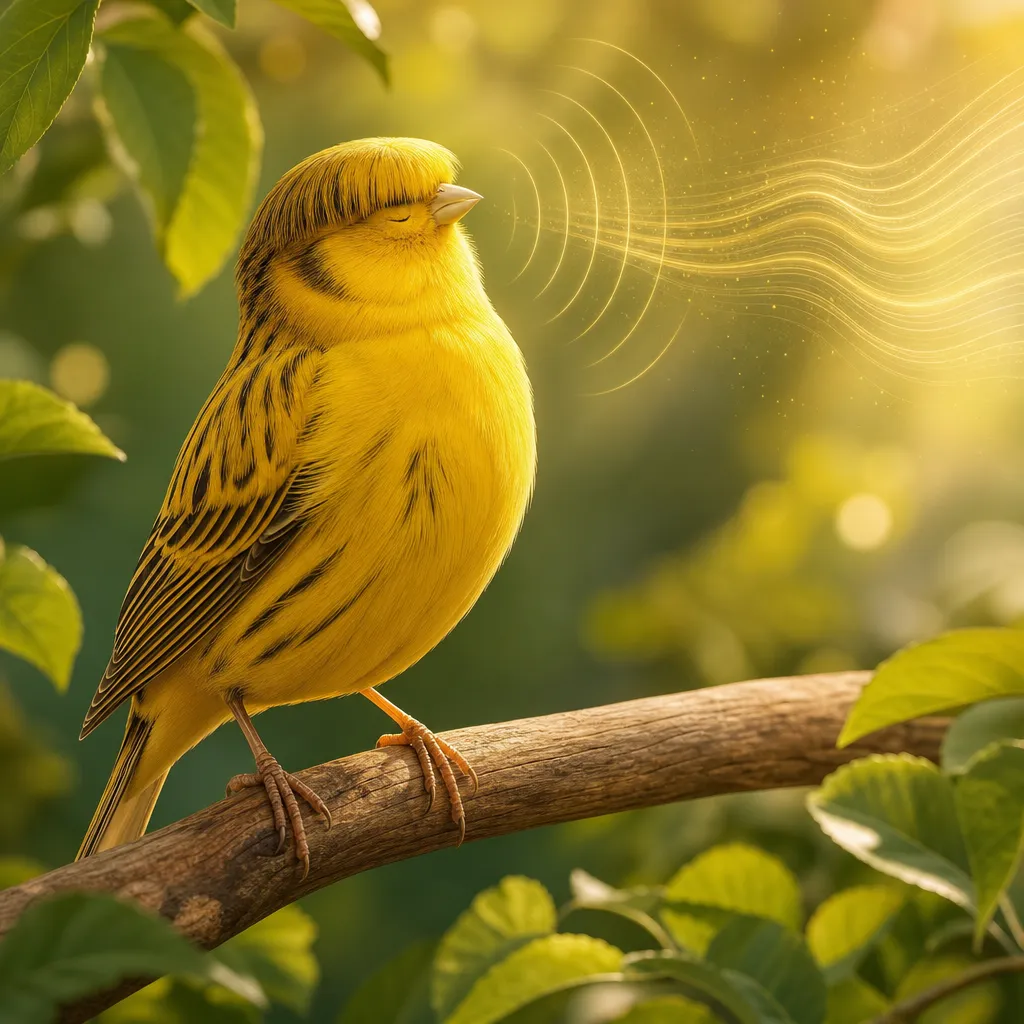
Here plumage and shape don't matter: the only judging criterion is song quality. Song canaries are bred and selected exclusively for their singing ability.
- Harzer Edelroller (or Harz) — Originating from the Harz region in Germany. Closed-beak song, low and continuous, with defined tours ("turns"). The most famous song canary in the world. Its song resembles a flowing stream.
- Malinois (or Waterslager) — Belgian canary. Sings with closed beak with gurgles that imitate the sound of water ("water-slag"). Brighter timbre than the Harzer.
- Timbrado Español — Spanish canary. Sings with open beak with metallic sounds and rhythmic variations. The song is lively, brilliant and very different from its northern European cousins.
- American Singer — Hybrid created in the USA by crossing German canaries (Harzer) with color canaries. Melodic song that combines German technique with the liveliness of English canaries.
- Italian Singer (Canarino da Canto Italiano) — Relatively recent breed developed in Italy. Melodic song with variations and trills highly appreciated in Italian shows.
4. Which Breed to Choose?
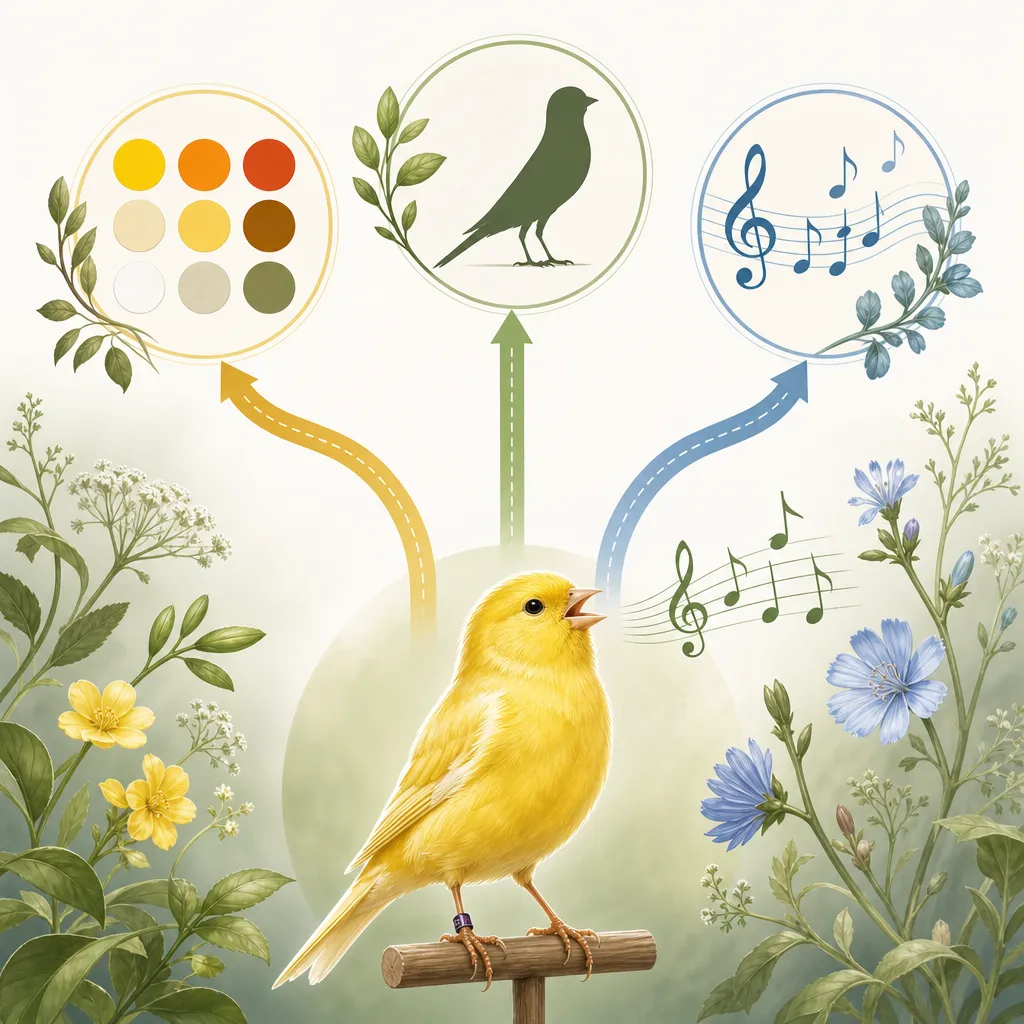
The choice depends on what you're most passionate about. Here's a quick guide:
| If you like... | Choose... |
|---|---|
| Genetics and colors | Lipochrome and melanin color canaries |
| Shape and aesthetics | Shape and posture canaries (Gloster, Norwich, Lizard...) |
| Music and sound | Song canaries (Harzer, Malinois, Timbrado) |
| Shows and competitions | Any breed — but pick one and specialize |
| Limited space | Fife Fancy or Gloster (small size) |
Expert breeders' advice: specialize in one or two breeds. Knowing a breed in depth will give you more satisfaction (and better show results) than spreading yourself across many.
5. Genetics and Selection: The Role of Software
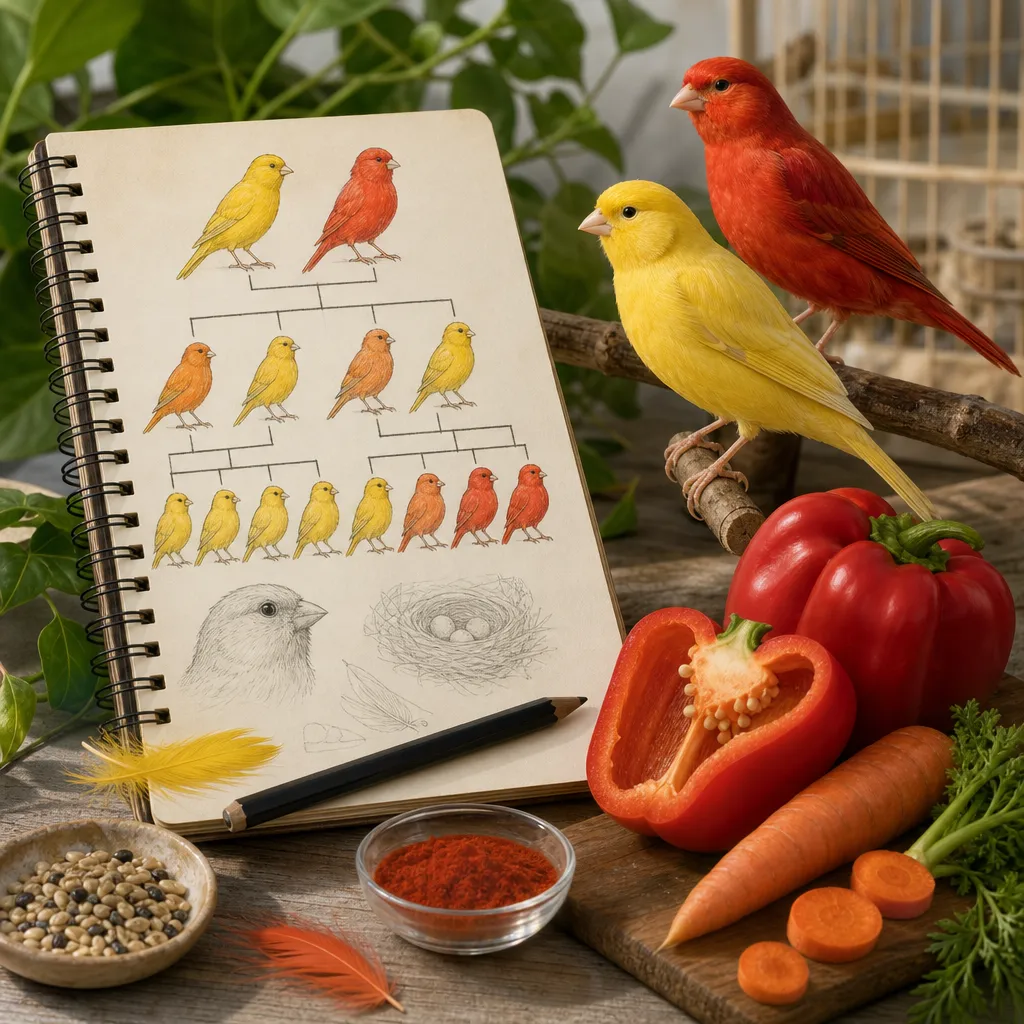
Breeding quality canaries is not just a matter of passion: it's science. Every breed has its genetic rules. For example:
- In lipochrome canaries, the red gene is recessive and linked to the presence of carotenoids in the diet.
- In melanin canaries, the dilution of brown into agate or isabella follows precise dominance/recessivity patterns.
- In mosaic canaries, sexual dimorphism is governed by sex-linked genes.
- In shape canaries, the corona crest in Gloster is lethal in homozygosity (two copies of the gene kill the embryo).
GenHub was designed precisely for this: simulating pairings, calculating the phenotypic probability of offspring and tracing pedigree up to 10 generations. The integrated Bayesian engine analyzes each subject's genotype and tells you exactly what to expect from a pair — even before the chicks are born.
Try GenHub free tools
Simulate genetic pairings and calculate inbreeding, then sign up to unlock the full breeding software.
6. Practical Tips for Breeders

- Document everything. Keep track of pairings, clutches, rings and pedigrees. Management software like GenHub simplifies your life.
- Monitor inbreeding. A COI (Coefficient of Inbreeding) above 10% increases the risk of malformations and reduces fertility.
- Participate in shows. Comparing with other breeders is the best way to understand if you're going in the right direction.
- Targeted feeding. Red canaries need carotenoids (carrot, red pepper, canthaxanthin). Song canaries benefit from seeds rich in essential oils.
- Buy from serious breeders. A good breeder is 50% of success. Always ask for the pedigree.
- Join an association. FOI in Italy, COM internationally. They give you access to shows, official rings and networking.
Have questions about canary breeds or genetics?
Contact us to receive free guides.
Content created with AI support and human editorial review.