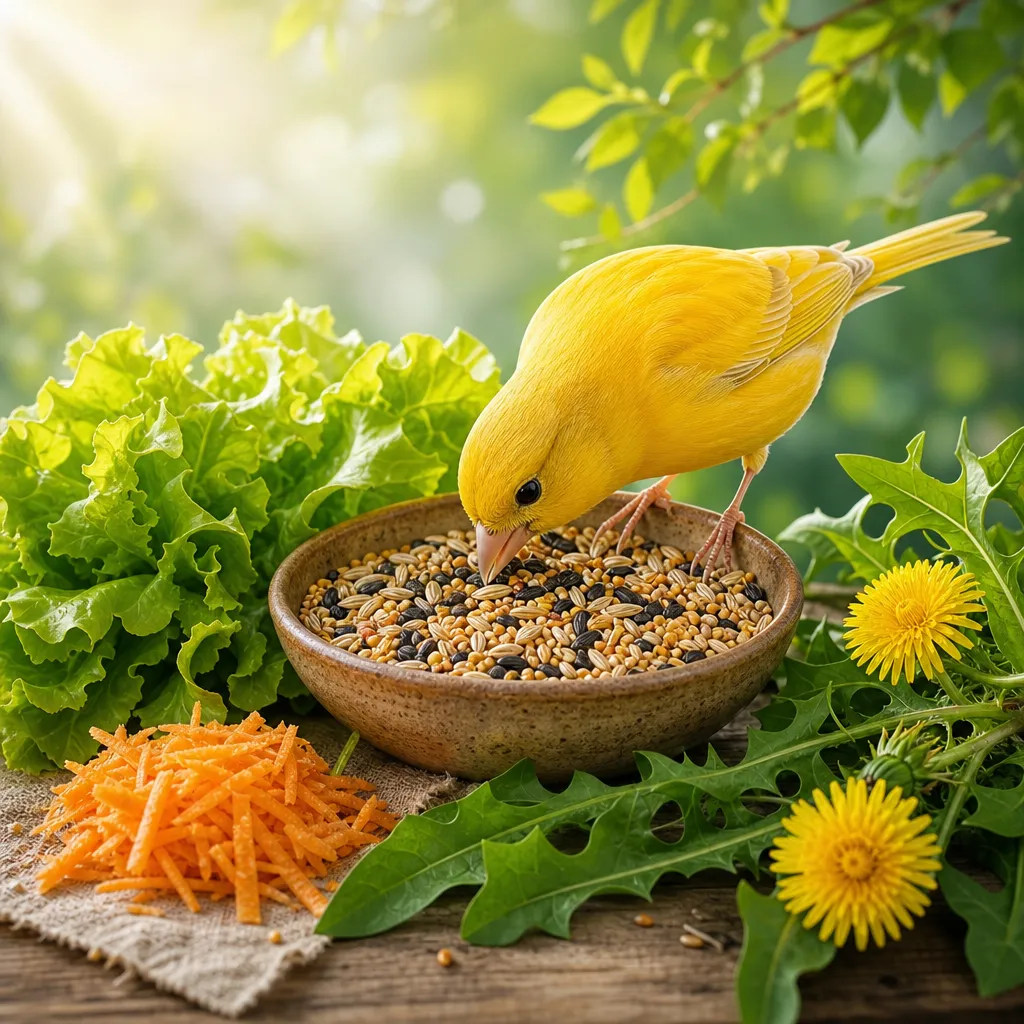
The moult is the replacement of the plumage: a normal physiological process, but also demanding for the canary's body. Rebuilding thousands of feathers requires energy, protein and sulphur amino acids. A well-managed moult produces compact, glossy plumage; a neglected one leaves dull feathers, long delays and more fragile birds. This guide covers timing, diet and warning signs — without alarmism, but without underestimating it.
In this guide:
1. What the moult is
The moult is the orderly replacement of old feathers with new ones. In an adult canary it is typically annual and involves body plumage, coverts and — in the full moult — flight and tail feathers. Young birds of the year go through a partial juvenile (or "nest") moult, which usually does not replace the large wing and tail feathers.
Adult moult
- Full: body + wings + tail
- Usually once a year
- High protein demand
- Reduced or absent song
Juvenile moult
- Partial (often body only)
- Nest wings and tail stay
- Adult plumage and final colours
- Key moment for colour feeding
Knowing which moult you are watching helps you calibrate expectations and diet: a young bird in juvenile moult does not "lose its wings", while an adult in full moult renews flight and tail feathers gradually and symmetrically.
2. When it comes and how long it lasts
In most aviaries the main adult moult falls in late summer, roughly July to September, after the breeding season and in response to the shortening photoperiod. Typical duration is about 6–10 weeks, but it varies with climate, light, physical condition and the bird's genetics.
| Phase | Approximate period | What to expect |
|---|---|---|
| Moult onset | End of breeding season | First feathers on the cage floor; song fading |
| Full moult | Middle weeks | Intense replacement; higher protein need |
| End of moult | Last 2–3 weeks | Compact plumage; activity and song return |
In captivity artificial light can bring the moult forward or delay it. Irregular photoperiods or abrupt changes in light and temperature can trigger "out-of-season" or partial moults: light management must be gradual, as described in the stress and light section.
3. Signs of a normal moult
A physiological moult has recognisable features. Knowing what is normal keeps you from confusing feather replacement with a health problem.
- Feathers on the floor: a steady but moderate presence of small feathers, not sudden handfuls.
- Gradual, symmetrical replacement: flight feathers drop in order, a few at a time, mirrored between the two wings; the bird can still fly.
- Pin feathers (quills): new feathers emerge wrapped in a keratin sheath, then freed by the beak during preening.
- Behaviour: a calmer bird that preens often, with reduced song; appetite kept or increased.
- No large bare skin areas: some thinning is possible, but not wide bald patches.
Remember: during the moult song naturally drops. Do not read silence as illness or as proof of sex — see also the song and sexing guide.
4. Diet during the moult: protein and soft food
Feathers are largely made of keratin, a protein rich in sulphur amino acids such as methionine and cysteine. During the moult protein demand rises: a seed-only diet is too poor to support fast replacement and quality plumage. Protein soft food (pastoncino) therefore becomes the pillar of this period.
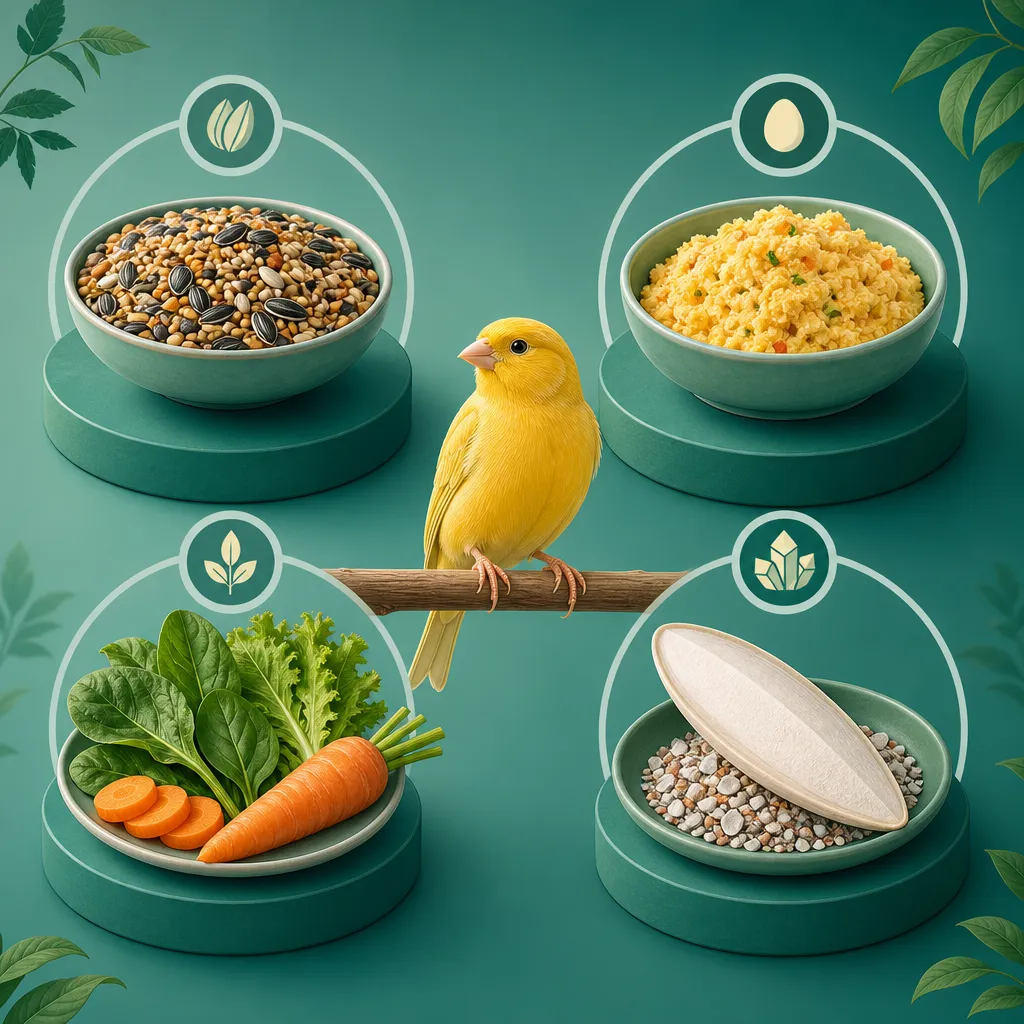
Aim for a balanced base and add moult-focused foods:
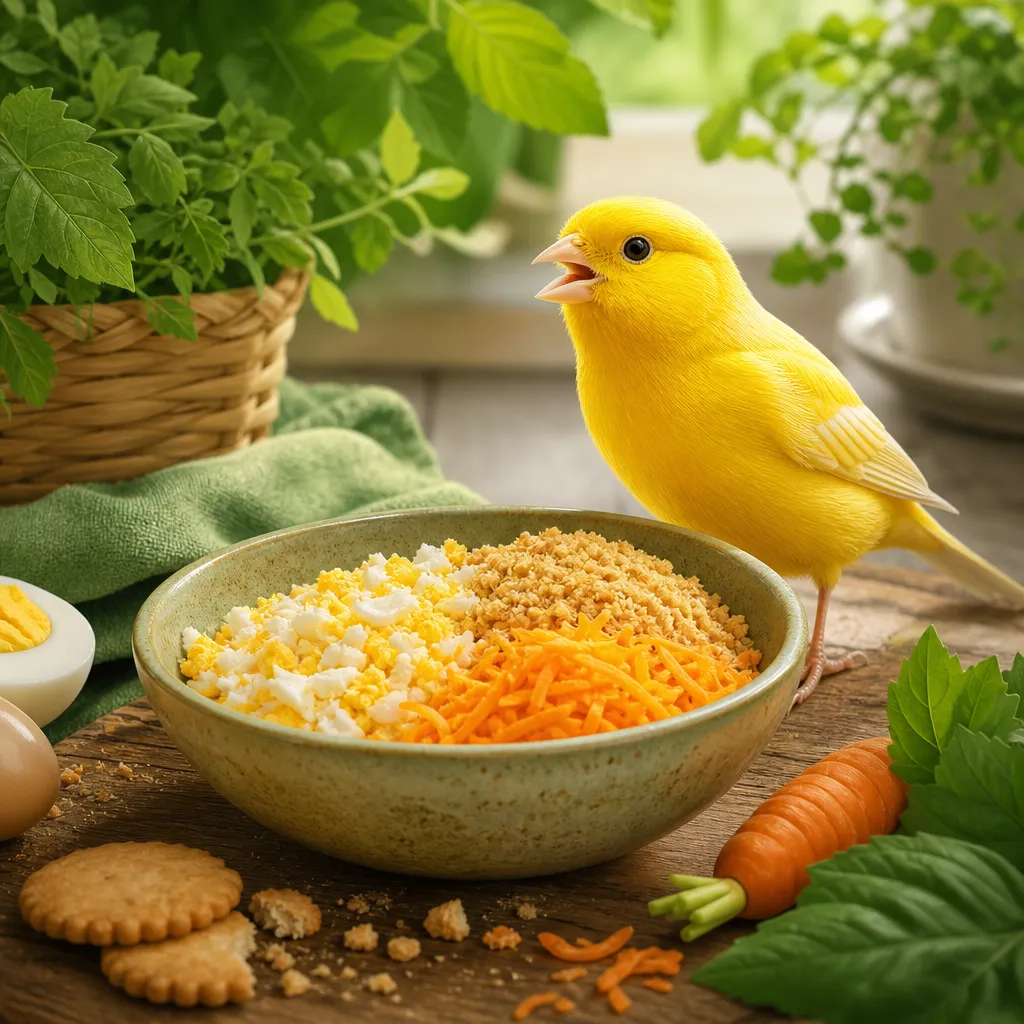
- Protein soft food (egg-based or commercial) offered more often than at maintenance: it provides protein and amino acids for keratin.
- Animal protein in small amounts (crumbled hard-boiled egg) as a temporary boost on heavy-moult days.
- Vegetables and greens for vitamins, beta-carotene and hydration, offered fresh and washed.
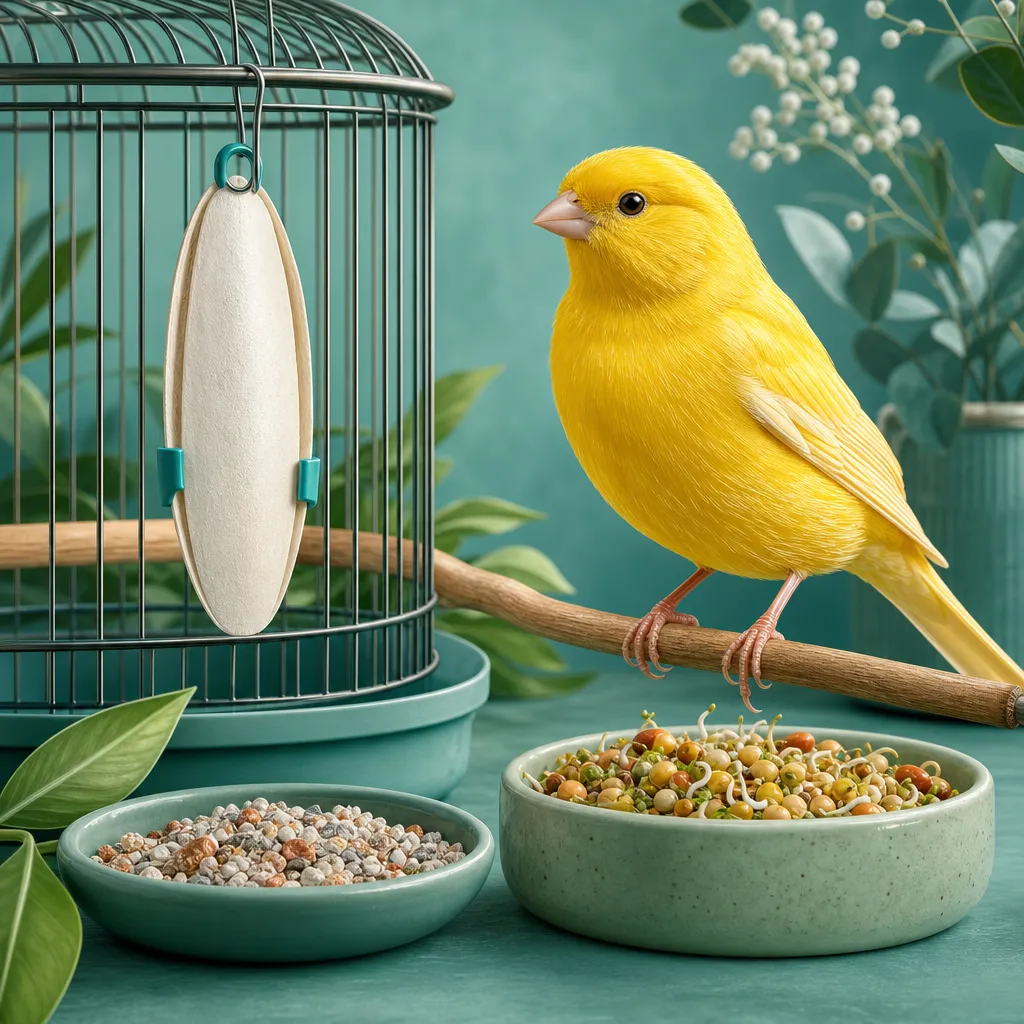
- Quality seed mix as a base, with optional soaked/germinated seed; always clean water.
- Cuttlebone and supplements with B-group vitamins and amino acids, as needed and without excess.
Useful deep-dives
For doses, types and correct use of soft food see the soft food guide. For the full year-round diet plan see the feeding guide.
A separate topic is colour: during the moults (especially the juvenile moult and the adult full moult) you can act on colouration with foods rich in carotenoids or specific colour agents in red lines. Colour "sets" only on growing feathers, so colour feeding must be set up during the moult and not afterwards.
5. Management: stress, light and bathing
The moult is a period of greater vulnerability. Reducing stress shortens the timeline and improves plumage quality.
Reduce stress
- Avoid moves, cage changes and unnecessary handling.
- Limit crowding and squabbles: competition burns energy needed for replacement.
- Keep schedule and environment stable, with adequate night rest.
Light and temperature
Change the photoperiod gradually (about 15–20 minutes per week), avoiding abrupt jumps that can trigger irregular moults. Keep a comfortable, stable temperature and protect from draughts and swings.
Bathing
Offer a regular bath with clean water: it helps free the new feathers from the sheath, keeps the skin hydrated and supports efficient preening. Many birds enjoy bathing more often precisely during the moult.
Caution: do not pair or show birds in full moult. Wait for feather replacement to finish and condition to return before straining the body.
6. Stuck or incomplete moult
A stuck moult (or "arrested" moult) is when the process stalls or drags on too long, leaving old and new feathers mixed, quills that fail to open, or areas that never complete replacement. The most common causes:
Frequent causes
- Diet poor in protein and amino acids
- Irregular photoperiod or insufficient light
- Chronic stress, cold or draughts
- Poor physical condition or parasites
What to do
- Increase quality protein and soft food
- Regularise light and temperature
- Reduce stress and crowding
- Regular baths; see a vet if it persists
A special case is the French moult (or "continuous moult"), where feathers drop and regrow constantly without ever stabilising: here the origin may be managerial, nutritional or linked to environmental and health factors, and it needs careful assessment and often a vet's opinion.
7. Moult or illness? How to tell
Not all feather loss is moult. Some signs mean you should investigate beyond the normal seasonal replacement.
| Observation | Normal moult | Possible problem |
|---|---|---|
| Feather loss | Gradual, symmetrical | Sudden, patchy or in one area only |
| Skin | Healthy, feathers growing | Reddened, scabby, wide bare areas |
| Behaviour | Active, preening, eating | Apathy, fluffed feathers, reduced appetite |
| Duration | A few weeks, then over | Continuous or never ending |
Marked itching, self-plucking, scabs, laboured breathing, altered droppings or lethargy are not moult signs: they may indicate parasites, deficiencies or infections. In these cases see the diseases guide and, for abnormal feather loss specifically, the feather-loss guide. When in doubt, consult an avian vet.
8. After the moult: plan the season
Once the moult is over and condition recovered, the bird is ready for the new season. It is the time to plan pairings and simulate genetic results before forming pairs.
Try GenHub free tools
Simulate genetic pairings and calculate inbreeding, then sign up to unlock the full breeding software.
9. Moult checklist
- ☐ Protein soft food increased over maintenance
- ☐ Fresh vegetables and clean water every day
- ☐ Targeted supplements (amino acids, vitamins) without excess
- ☐ Stable photoperiod and gradual light changes
- ☐ Comfortable temperature, no draughts
- ☐ Regular bath available
- ☐ Reduced stress: no moves or pairing
- ☐ Check symmetry and duration; no bald patches
- ☐ Vet if the moult stalls or illness signs appear
Also read: Diet by phase · Soft food · Feeding · Diseases · Feather loss · Song & sexing · Genetic predictor
Moult won't finish? Contact us.
Content created with AI support and human editorial review. It does not replace a veterinarian's advice.