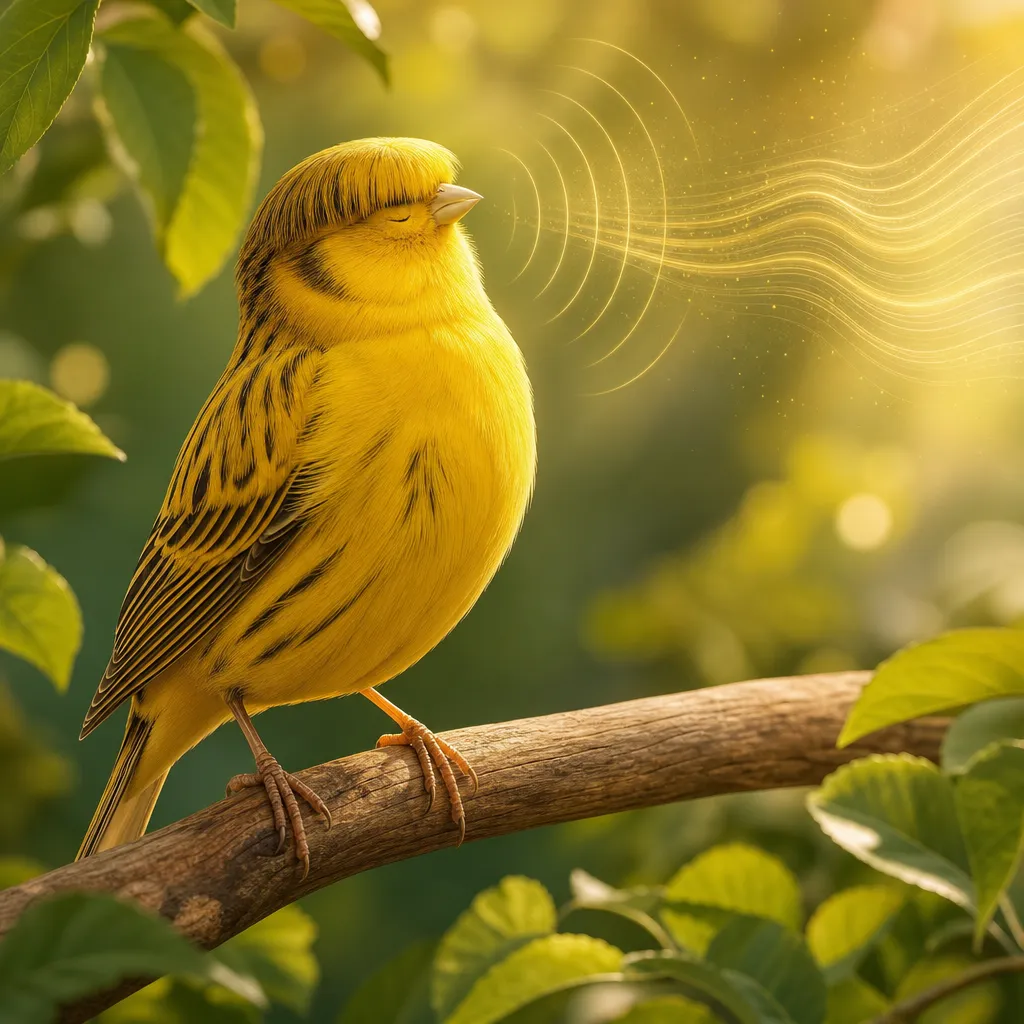
In canaries, sexing is not always immediate: in many colour lines dimorphism is minimal. Song, behaviour and — in adults in season — some physical signs help, but no “living-room” method is 100% infallible. This guide gives practical criteria and the limits to know before pairing.
In this guide:
1. Dimorphism: how much can you really see?
In colour canaries (lipochrome and melanin) cocks and hens often look alike. In some type or song lines, behavioural differences are clearer than plumage. Do not rely only on breast colour or “looks bigger”.
More useful signs
- Structured, prolonged song (cock)
- Courtship and mounting
- Nest building / laying (hen)
- Cloaca in season (only with experience)
Misleading signs
- Short “calls” also from hens
- Size and colour intensity vary
- Still immature young
- Birds outside the breeding season
2. The cock’s song
An adult cock in good condition produces a melodic, repeated song, often with closed or half-closed beak, with articulated phrases. The hen may call, chirp or give short notes, but usually does not develop a full “soloist” song.
- Listen in quiet, in the morning, with enough light.
- Temporarily separate suspected cocks: song emerges better without confusing competition.
- In moult or out of season song may drop: do not judge in those periods.
Tip: record 30–60 seconds of audio. Comparing several birds makes it easier to tell true song from occasional calls.
In young cocks song matures more slowly: see the section on young birds.
3. Young birds: when do they start singing?
Young males do not leave the nest as full singers. At first they give calls, chirps and brief attempts; structured song — repeated phrases, often with closed beak — usually appears between 4 and 8 months, sometimes later, depending on genetic line, season and physical condition.
What to expect by age
- 2–3 months: calls and varied notes; sex uncertain
- 4–6 months: first song attempts in males
- 6–8+ months: clearer song, useful for sexing
- First season: more reliable confirmation
Why not sex too early
- Young hens can chirp quite a lot
- A shy cock takes time to sing
- In moult song drops or disappears entirely
- Stress and crowded housing mask song
During moult (feather replacement) many males stop or reduce singing: do not read silence as proof of hen. Wait until moult ends and photoperiod is favourable before judging a young bird. If you need certainty before the first season, DNA sexing remains the safest option.
Practical rule: do not sell or pair a young bird as a “singing cock” until you have observed structured song for at least a week, outside heavy moult and with adequate light.
4. Photoperiod: light, song and condition
Photoperiod length (hours of light per day) influences breeding hormones and, in turn, male song intensity and readiness to breed. Longer days — as in spring — stimulate song and courtship; short days and autumn/winter tend to reduce them.
- Song: with 12–14 hours of light adult cocks sing more; below 10 hours many quieten down.
- Condition: long photoperiod + suitable temperature (around 18–22 °C) favour breeding “condition”.
- Young birds: young males also respond to light, but song still matures with age.
Artificial light for breeders
In captivity you can bring the season forward with timed lamps, gradually increasing light (about 15–20 minutes per week) up to 12–14 total hours. Avoid sudden jumps from few hours to many in a few days: stress helps neither song nor breeding.
| Phase | Typical photoperiod | Effect on song / sexing |
|---|---|---|
| Rest (autumn/winter) | 8–10 hours | Reduced song; sexing difficult |
| Pre-season | 10–12 hours (gradual increase) | First signs; useful to observe young birds |
| Breeding season | 12–14 hours | Song and behaviour more reliable |
There are no “magic” shortcuts: an extreme photoperiod does not turn a silent cock into a singer nor guarantee fertility. For pairing, temperatures, feeding and the full calendar see the pairing guide.
5. Behaviour: courtship and nest
In season (long photoperiod, suitable temperature) behavioural signs become more reliable — see also the photoperiod section.
- Cock: sings toward the hen, offers food, mounts, may be territorial.
- Hen: crouches, gathers material, builds nest, lays.
For full season management: pairing guide. For breeds and traits: breed guide.
6. Practical sexing step by step
- Age: wait at least 4–6 months (better a full first season) before declaring sex with confidence.
- Observe song for several days in favourable conditions.
- Controlled pair trial: divider, then union; note mounting and egg laying.
- Cloacal inspection only if you know what to look for (swelling/shape in a cock in breeding condition): risk of errors and stress if improvised.
- DNA sexing (swab/feather) when absolute certainty is needed (sale, rare lines, persistent doubt).
| Method | Typical reliability | When to use it |
|---|---|---|
| Song | High in adult cocks in season | First screening of singers |
| Behaviour / nest | High in season | Practical confirmation in the aviary |
| Cloaca | Medium (needs experience) | Adults in condition, with care |
| DNA | Very high | Doubt, young birds, valuable lines |
7. Song canaries (Malinois and related)
In song lines (e.g. Malinois / Waterslager, Harzer, Timbrado) song is not only a sex clue: it is the main selection trait. Cocks are judged on timbre, tour variety, purity and absence of faults.
- Train and judge cocks in a quiet environment, with dedicated song cages when required by the rules.
- Hens remain essential for transmission: also select on pedigree and quality of singing brothers.
- Do not confuse “sings a lot” with “sings well”: in contests quality and standard count.
To understand mutations and pairings on parallel colour lines, see the genetics guide.
8. Method limits (and mistakes to avoid)
- Declaring sex at 6–8 weeks only “because it chirps”.
- Selling as a cock a bird that gave a few notes on one isolated day.
- Ignoring stress: a silent cock is not automatically a hen.
- Forming cock–cock or hen–hen pairs by mistake: zero fertile eggs and wasted time.
If the clutch produces only clear eggs, review sex and fertility: egg guide. For species other than the canary, see also the goldfinch guide.
9. After sexing: choose the right pair
Once cock and hen are identified, the next step is genetic and health matching. Simulate phenotypes before putting the pair together.
Try GenHub free tools
Simulate genetic pairings and calculate inbreeding, then sign up to unlock the full breeding software.
10. Sexing checklist
- ☐ Young bird: at least 4–6 months (better a full first season)
- ☐ Bird not in heavy moult
- ☐ Adequate photoperiod (12–14 h in season) to assess song
- ☐ Structured song observed over several days
- ☐ Note courtship / nest behaviours
- ☐ Confirm with laying or DNA if in doubt
- ☐ Only then: genetic planning of the pair
Also read: Breeds · Pairing · Genetics · Eggs · Goldfinch · Feeding · Genetic predictor
Unsure about a bird’s sex? Contact us.
Content created with AI support and human editorial review.