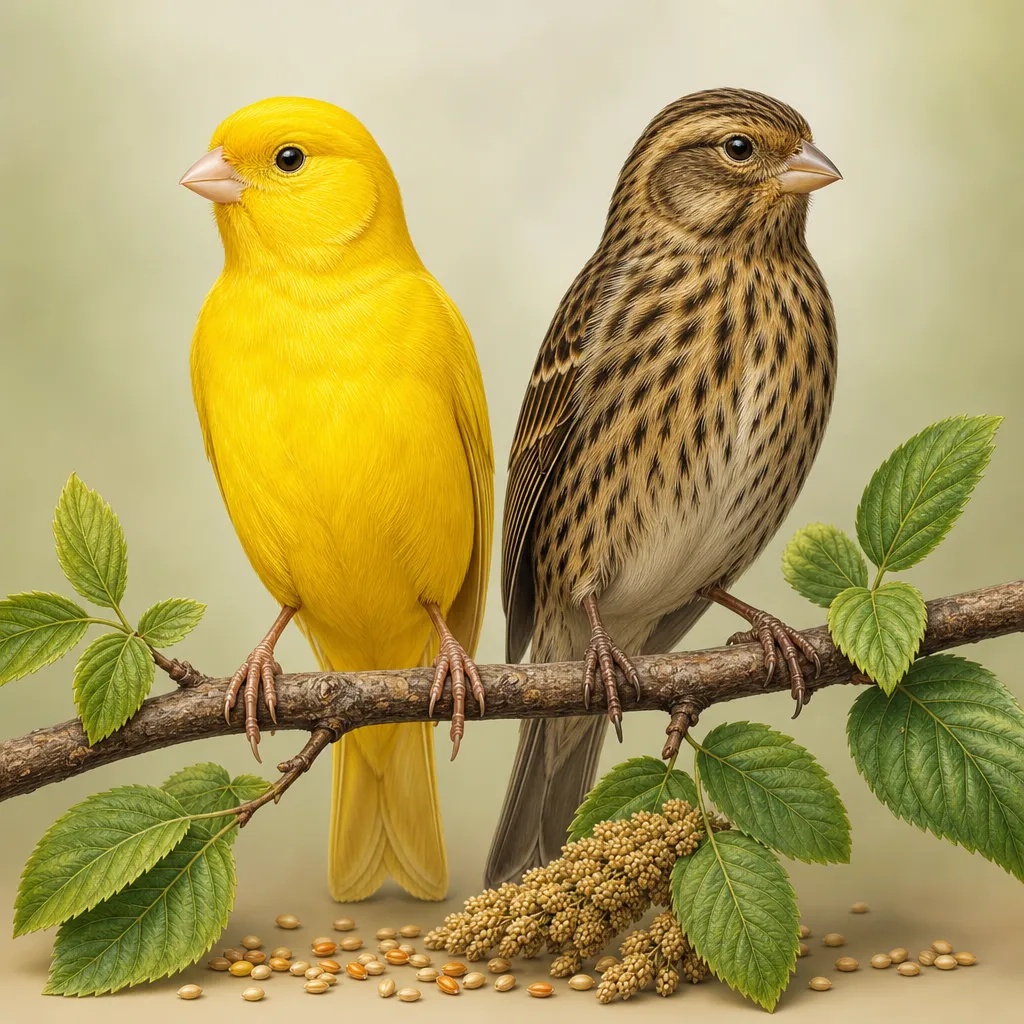
The European goldfinch (Carduelis carduelis, often still listed under Carduelis/Spinus depending on revisions) is a wild finch loved for colour and song. In captivity it needs legal rules, space and management different from the domestic canary (Serinus canaria domestica). This guide is for enthusiasts and breeders who want to do things properly.
In this guide:
1. Species: Carduelis carduelis
The goldfinch is recognised by its red face mask, yellow wing bars and pale body with black markings. Subspecies and captive lines exist (including selected mutations in some countries), but the base remains an agile, active bird that is more “wild” than a canary.
- Sexual dimorphism is often subtle: the cock may show a more intense mask and colours; song helps.
- In the wild it frequents farmland, edges and areas with thistles and composites.
- In a small cage it suffers: it prefers horizontal flight and enrichment.
2. Legal aspects (important)
In Italy and the EU, taking birds from the wild and keeping wild specimens is strictly regulated (bird protection, CITES where applicable, ringing, registers). Do not catch wild goldfinches. Keep only legally sourced birds (captive-bred, documentation, required rings).
Note: rules can change and vary by species/mutation/hybrids. Always check current law and guidance from associations and competent authorities before buying or breeding.
3. Housing: aviary and cage
Space and structure
- Prefer an aviary or a long cage for flight
- Perches of varied diameters, natural
- Sheltered zones from draught and extreme direct sun
- Fine mesh, safe from predators
Hygiene and enrichment
- Clean floors, renewed sand/paper
- Bath dish (much appreciated)
- Branches and safe plant material
- Avoid overcrowding and stress
In breeding use dedicated cages and reduce disturbance: goldfinches can be shyer than domestic canaries.
4. Feeding
The diet is based on a cardueline mix (niger, lettuce seed, canary seed, hemp in controlled amounts, thistle/composite seeds where available), plus greens and, in breeding, soft food/egg in measured amounts.
- Always fresh water; cuttlebone or calcium available.
- Sprouts and safe wild herbs (only if identified and untreated).
- Avoid excess fat and “treat” seeds as the sole diet.
Many food-hygiene principles also apply to canaries: see canary feeding and soft food, adapting amounts to the species.
5. Moult and care
Moult is a demanding period: reduce stress, keep a complete diet and avoid sudden changes. Check plumage, feather shafts, vent condition and breathing.
- Vitamin-mineral support only if needed and dosed.
- Frequent bathing (clean water) helps plumage.
- External parasites and respiratory issues: act early (also see principles in canary diseases, with veterinary diagnosis for the species).
6. Breeding
Breeding goldfinches needs mature birds, quiet and suitable nests (often basket/open with fine material). The hen lays few eggs; incubation and rearing need soft food and minimal disturbance.
- Form compatible pairs; watch cock aggression.
- Photoperiod and natural season remain important references.
- Do not force too many clutches: exhaustion and failures increase.
For egg and chick timing you can draw inspiration from tools used for canaries (incubation, chicks), remembering that species parameters may differ.
7. Goldfinch vs canary: key differences
| Aspect | Goldfinch | Canary |
|---|---|---|
| Species | Carduelis carduelis (European finch) | Serinus canaria domestica |
| Temperament | Shyer, active, “wilder” | More adapted to cages and handling |
| Space | Prefers aviaries / long cages | Standard breeding cages often enough |
| Colour genetics | Less standardised (except dedicated lines) | Wide: mutations and pedigree (see GenHub guides) |
| Legality | Watch origin and rules | Domestic captive-bred bird |
Goldfinch × canary hybrids exist in aviculture: they need experience and, where required, compliance with rules and registrations. To simulate pairings on the canary side use the GenHub genetic predictor; do not treat the goldfinch as “a colourful canary”.
8. GenHub: when it makes sense
GenHub is optimised mainly for canary genetics. If you work with goldfinches, hybrids or mixed lines, the predictor remains useful on the canary stock and for a culture of breeding planning.
Try GenHub free tools
Simulate genetic pairings and calculate inbreeding, then sign up to unlock the full breeding software.
9. Goldfinch checklist
- ☐ Legal origin and documentation in order
- ☐ Adequate flight space and quiet
- ☐ Cardueline mix + greens + water/calcium
- ☐ Extra support in moult and breeding
- ☐ Do not treat it as a “standard” canary
- ☐ For canary stock: plan with GenHub
Also read: Song & sexing · Canary breeds · Feeding · Pairing · Genetics · Diseases · Genetic predictor
Questions on keeping and planning? Contact us.
Content created with AI support and human editorial review.