Seeing feathers on the cage floor is alarming, but feather loss in canaries is almost never a single problem: it is a symptom with many possible causes. The key distinction is between a physiological moult — normal and seasonal — and pathological loss linked to parasites, deficiencies, stress or disease. This guide gives you a differential-diagnosis method: observe the signs, cross them with the causes, and choose the right action before you panic or, worse, treat at random.
In this guide:
1. Losing feathers is not always disease
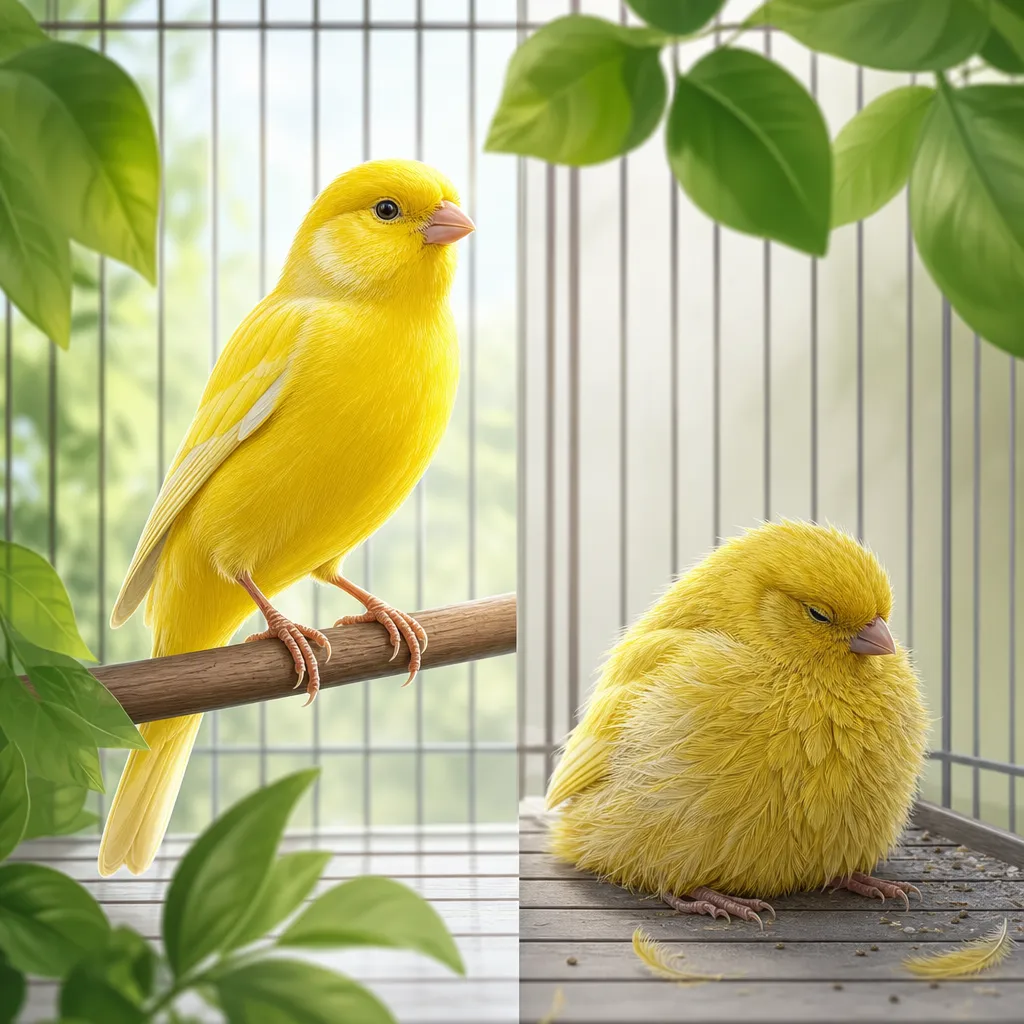
Plumage renews naturally: a healthy canary sheds and regrows feathers every year. Before worrying, tell a diffuse, symmetrical loss (often physiological) from a localised loss with reddened skin, crusts or altered behaviour (more suspicious). Also watch the rest: appetite, song, droppings, breathing and liveliness tell you far more than fallen feathers alone.
Reassuring signs
- Diffuse, symmetrical loss in late summer
- New feathers (in “pin/sheath”) regrowing
- Normal appetite, song and droppings
- Intact skin, no redness
Signs that need attention
- Localised bald patches (head, neck, back)
- Reddened skin, crusts, obvious itching
- Ruffled plumage, apathy, weight loss
- Loss out of season or prolonged
If feather signs come with laboured breathing, diarrhoea or strong apathy, do not stop at this guide: consult the canary diseases guide and consider the vet.
2. Physiological vs pathological moult
The moult is the scheduled replacement of plumage. In canaries it typically happens once a year, usually in late summer (July–September) as days shorten. During the moult song drops, the bird burns more energy and looks less bright: this is normal and temporary.
Physiological moult
- Seasonal (late summer), lasts 6–8 weeks
- Gradual and symmetrical loss
- Immediate regrowth of new feathers
- Head never suddenly fully bald
Abnormal / pathological moult
- Out of season or continuous all year (“French moult”)
- Areas that stay bare, no regrowth
- Irritated skin, itching, crusts
- Weakness, weight loss, apathy
So-called permanent moult may stem from an overly constant temperature, prolonged artificial light, unbalanced feeding or chronic stress. For the full cycle, timing and environmental management of the moult, go deeper in the canary moult guide.
Rule of thumb: if the loss is symmetrical, new feathers are coming through and the bird eats and moves well, it is almost certainly moult. Support with a rich diet and a calm environment, without medicating.
3. Mites and parasites
External parasites are among the most common causes of pathological feather loss. The red mite (Dermanyssus gallinae) attacks mostly at night, sucks blood and causes restlessness, itching, anaemia and damaged plumage. Feather mites and scaly mites (mites that burrow into the skin) instead cause crusts on legs, beak and bare areas.
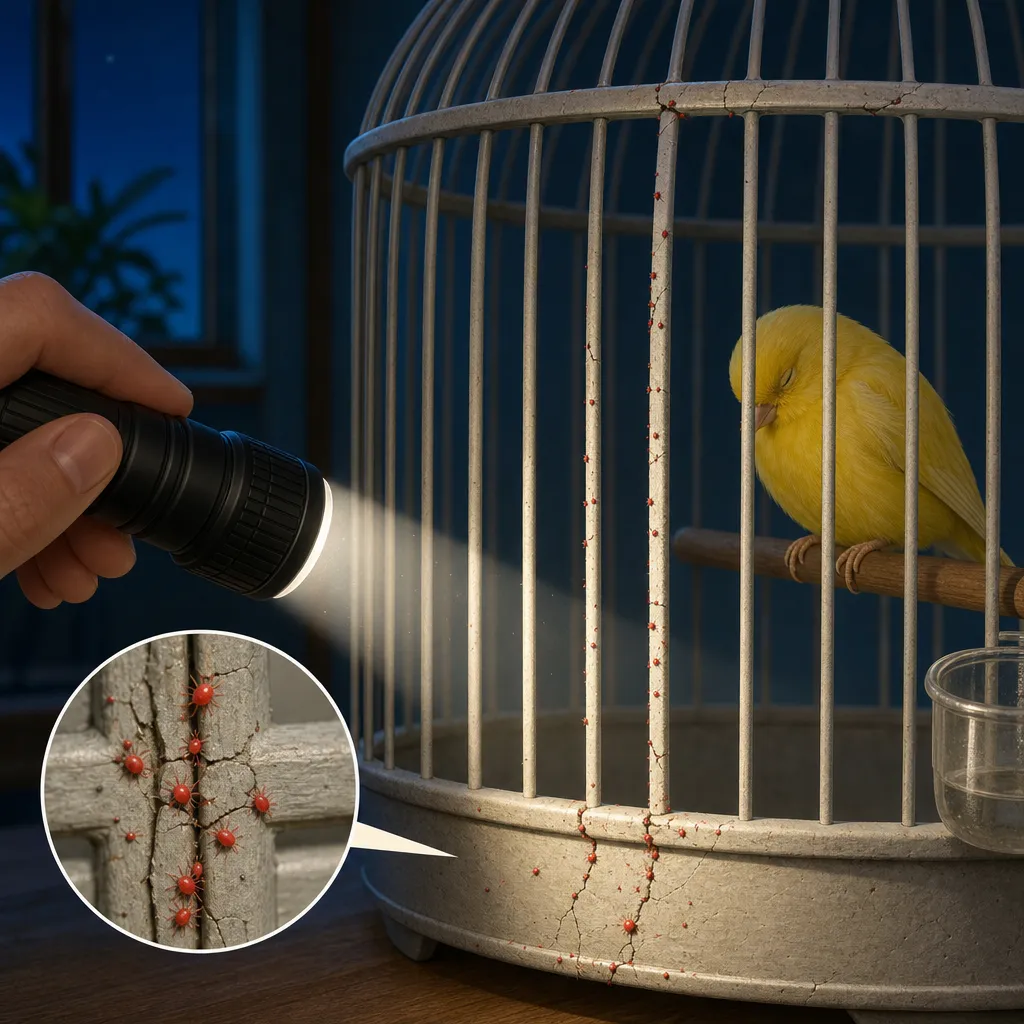
- Signs: the bird scratches, sleeps badly, plucks its feathers; red/black dots on perches and nests (the red mite).
- Night test: cover the cage with a white cloth at night; in the morning look for moving dots or blood smears when crushed.
- Scaly legs and crusts around beak and eyes suggest scaly (mange) mites.
Treatment depends on the parasite (specific products, full disinfection of cage, perches and nests, repeated later to hit the eggs). For protocols, products and prevention see the canary mites guide.
Careful: with the red mite the problem is the environment, not just the bird. Treating only the canary and not the cage and room leads to constant relapses.
4. Dietary deficiencies
Feathers are largely made of keratin: without the right nutrients plumage becomes brittle, dull, with faulty growth or loss. A seeds-only diet, high in fat and low in protein and micronutrients, is a frequent — and underrated — cause of coat problems.
Key nutrients for plumage
- Protein / amino acids (methionine, lysine): feather structure
- Vitamin A: skin and mucous membrane health
- Biotin and B vitamins: feather and skin quality
- Minerals (zinc, calcium): strength and regrowth
Signs of deficiency
- Dull, frayed feathers or “stress bars”
- Slow regrowth or malformed feathers
- Long, difficult moult
- Dry skin, poor beak/nail quality
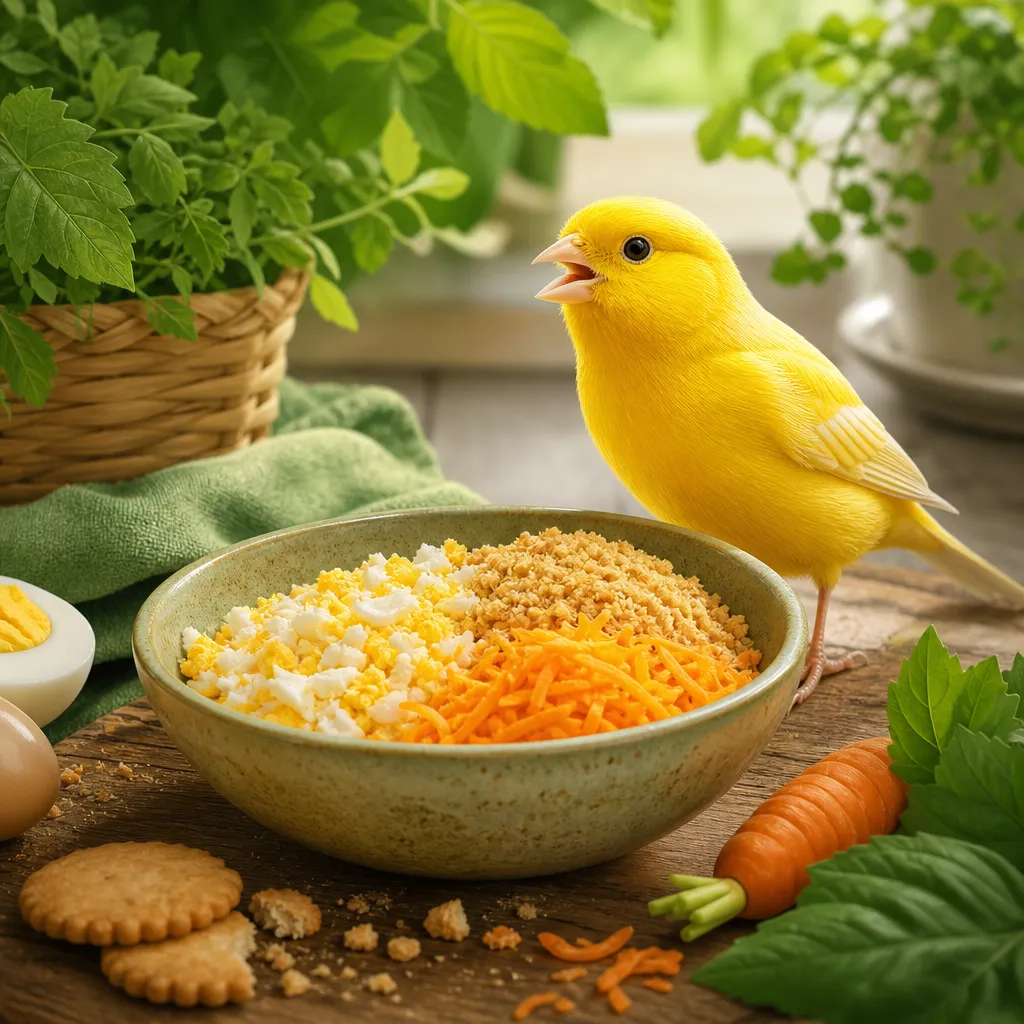
During moult and regrowth, raise protein intake with a good soft food (egg food), offer vitamin-A-rich greens (carrot, radicchio, dandelion) and supplement as needed. For rations, the right foods and what to avoid see the feeding guide; for choosing and using soft food, the soft food guide.
5. Stress, boredom and self-plucking
Behavioural and environmental factors also cause feather loss. A stressed, bored or overcrowded canary may resort to self-plucking (actively tearing out its feathers) or suffer plucking by cage mates.
- Overcrowding and conflict: too many birds, small cages, hierarchies leading to pecking and plucking on the back/nape.
- Boredom and lack of stimulation: in poor environments the bird redirects behaviour onto its own plumage.
- Environmental stress: noise, constant light, frequent moves, predators (cats) or draughts.
- Breeding stress: hens and cocks under breeding pressure may pluck the belly area (partly physiological for the brood patch).
How to act: reduce overcrowding, offer regular baths, balanced light/dark, perches and fresh greens as enrichment, and remove sources of fear. Plumage often rebuilds on its own once the cause is removed.
6. Viral, bacterial and skin causes (vet note)
A minority of feather-loss cases stem from actual diseases that require veterinary diagnosis. They are not as common as moult, mites or deficiencies, but should be considered when the picture worsens or does not respond to basic management.
- Fungal and bacterial dermatitis: skin infections with crusts, redness and localised loss.
- PBFD (Psittacine Beak and Feather Disease): a viral disease affecting feathers and beak, typical of parrots; in canaries it is rare, but circovirus/polyomavirus with plumage abnormalities in young birds are described. Diagnosis is lab-based only.
- Hormonal/metabolic disorders: thyroid or liver problems can show up as poor-quality plumage.
Important: do not “try at random” with antibiotics or antifungals. These conditions require an avian vet for a correct diagnosis (exam, swab, possible PCR). Improper drug use makes things worse.
7. Table: cause → sign → action
Use this table as a quick differential-diagnosis map. Always start from the observed sign and trace it back to the most likely cause before acting.
| Cause | Typical sign | Recommended action |
|---|---|---|
| Physiological moult | Diffuse, symmetrical loss in late summer, new feathers growing, lively bird | Support with protein diet and calm; no drugs |
| Abnormal / permanent moult | Continuous loss all year, areas that do not re-cover | Correct light, temperature and diet; see vet if it persists |
| Mites / parasites | Itching, night restlessness, crusts, dots on perches | Treat bird + environment; repeat for the eggs |
| Dietary deficiencies | Dull/brittle feathers, slow regrowth, difficult moult | Improve diet: protein, vit. A, biotin, minerals |
| Stress / self-plucking | Bald patches from pecking, overcrowding, boredom | Lower density, enrich environment, remove fear factors |
| Viral / bacterial / skin | Diffuse crusts, deformed beak/feathers, apathy, no response to management | Isolate and consult the avian vet |
8. When to isolate and call the vet
Most feather loss resolves with environmental and dietary management. But some signs demand that you isolate the bird (to protect the rest of the aviary and observe it better) and contact a professional.
Isolate immediately if…
- You suspect contagious parasites (mites, mange)
- There are diffuse crusts or skin lesions
- The bird is apathetic, puffed up, not eating
- Several birds show the same symptoms
Call the vet if…
- Loss does not improve after fixing diet and environment
- There are feather or beak deformities
- Blood, laboured breathing or diarrhoea appear
- You want a certain diagnosis (swab/PCR)
For a full picture of general symptoms and diseases beyond plumage, keep the canary diseases guide handy.
9. Diagnosis checklist
- ☐ Is the loss diffuse and symmetrical, or localised?
- ☐ Is it moult season (late summer)?
- ☐ Are new feathers coming through in the bald areas?
- ☐ Any itching, crusts or dots on perches/nests (mites)?
- ☐ Is the diet varied (protein, vit. A, greens) or seeds only?
- ☐ Overcrowding, boredom or pecking among mates?
- ☐ Are appetite, song, droppings and breathing normal?
- ☐ Do symptoms persist despite correct diet and environment?
- ☐ Is isolation and/or an avian vet needed?
Try GenHub free tools
Simulate genetic pairings and calculate inbreeding, then sign up to unlock the full breeding software.
Also read: Moult · Mites · Diseases · Feeding · Soft food · Genetic predictor
Is your canary still losing feathers? Contact us.
Sources and further reading
General references on bird health and welfare:
Content drafted with AI support and human editorial review.